
Conflict Resolution Skills for Environmental Professionals
**Note - For every course we have implemented live stream remote attendance options for those who prefer a no-contact alternative to in-person attendance.  You will need a computer and an internet connection.  We will follow the maximum in-person meeting size as per health authorities and if recommended we will only offer remote attendance.

If conditions permit, you are welcome to attend the course in-person, we likely will have between 5 to 10 in-person attendee's in a large room to provide safe spacing.  We also wipe every surface down and provide hand washing and disinfectant wipes as a courtesy.  If you would like more information or have any questions, please contact us via email or phone 425 270 3274.


This dynamic, hands-on workshop gives attendees an understanding of effective ways to deal with difficult situations and people. Participants will get extensive practice with skills that can be applied immediately. The overall goal of the course is for attendees to come away with an understanding of principles and techniques for maintaining a professional demeanor while managing conflicts, as well as knowledge of strategies that help keep a conflict from getting in the way of productivity.

This workshop is a companion course with our Facilitation and Collaborative Negotiations courses. What distinguishes this course is its focus on the use of interest-based bargaining techniques, made famous in the book Getting to Yes, for unraveling conflict into cooperation.

A combination of discussions, exercises, lectures, and mock disputes makes this workshop interactive, fun, and productive. 

"It was so helpful to actually practice conflict resolution skills in real-time in a safe environment with coaching. Michael is a terrific instructor; he makes the learning environment safe and non-judgemental." M. Wilber, March, 2013

Additional Discounts for registering related courses: There is an additional $50 discount when registering for either Collaborative Negotiation Skills for Environmental Professionals OR Facilitation Skills for Environmental Professionals when they are offered in the same week. The two registrations must be made at the same time to get the discount. There is an additional $100 discount when registering for all three classes when they are offered the same week. Registration for all three classes must be made at the same time. 

You may register online or by calling the Northwest Environmental Training Center at 425-270-3274.

Please wait to receive a course confirmation email, roughly one month prior to the class, before making any travel arrangements.


Intended audience

• Environmental professionals who deal with disputes, either on their own or as a third-party asked to assist others.
• Managers and mid-level professionals facing increasing pressures to accomplish their conservation mission while also improving stakeholder relations will greatly benefit from the material presented.
• Individuals who aspire to a leadership role where the ability to constructively deal with disputes is seen as a necessary job skill.
• For professionals with existing conflict resolution skills, this course provides an opportunity to refresh and add to their skill set.
*Note: This workshop is especially helpful for teams from the same organization. When colleagues attend the program together the organization benefits not only from these employees gaining skills but also from shared knowledge they can use to ‘team-up’ and support one another or act as an in-house consultant able to give advice to other employees.

Past attendees: Agency executives, mid-managers, regional biologists, species management experts, land managers, regulators, scientific team leaders, cross-agency coordinators, project managers, citizen participation experts, and regional directors. Other professionals such as HR professionals, consultants, and supervisors who deal with conflict will also benefit. This training will enhance anyone’s ability to deal with conflict in their own lives as well as helping others navigate through the process. This course is also intended to support career advancement for individuals who aspire to positions where constructive conflict management is a job requirement.

CEUs
0.70
Course Topics

• Suspending judgment and diagnosing the different world views in conflict
• Facilitating quality, respectful communications
• Engaging disputants in a search for common values
• Distinguishing between the surface issues and the real interests that are often hidden from view
• Analyzing conflict styles and how to deal with anger
• Performing a constructive, third party role
• Balancing power differences
• Applying a simple, but effective conflict resolution model
• Understanding and using the three features of durable agreements
• Knowing when to bring in a professional mediator
• Personal conflict survival attitudes and skills
 

Course Materials

Attendees will receive a course manual containing workshop proceedings and reference material.

What to bring

Please bring a pen or pencil, and notepad if you would like to take notes (you may also choose to take notes in your book). Lunch will be on your own, but drinks and snacks will be provided throughout the day.
Introduction to the California Environmental Quality Act (CEQA)

This workshop provides an applied overview of the California Environmental Quality Act, with an emphasis on the process and technical requirements of an environmental impact assessment. The course will begin with a brief background on environmental impact assessment in the U.S. and of CEQA's regulatory context, followed by an overview of various approaches used in scoping and preparing environmental impact assessments under CEQA. Students will examine the documents required under CEQA and the roles of key players involved. Students will also determine the adequacy of CEQA documents as they relate to environmental settings, impact assessment, mitigation development, significance thresholds, and data sources. Lastly, the course will include a discussion of the documents and processes for projects regulated by the National Environmental Policy Act (NEPA). 

After completing this course, participants will be able to:
- Understand and participate in CEQA evaluations
- Integrate CEQA environmental review into project approval processes
- Explain the environmental impact assessment requirements of CEQA
- Effectively review and comment on CEQA documents
- Identify and work with the various players in resolving CEQA issues

"[Richard Grassetti is] the first person I will call if I have CEQA questions." Anonymous, October 13, 2015

"This course presented CEQA in a very interesting simplified approach and an overall view of applications of CEQA to projects"  R. Bedi May 5, 2015

"Great energy, a wealth of knowledge and real world experience, humor.  I most appreciated his openness to thoughtful answers to all questions; and to the ethical foundation of CEQA work." M. Oakes, September 2013

"[The course gave me] more in depth knowledge of CEQA, the process, and new potential changes [completing the course] will enable me to more effectively conduct my job."- C. Peterson, Feb 2013


Registration: (*reduced tuition is available to employees of Native American tribes, government agencies, and nonprofits; students; and NAEP members). If you are having trouble registering online, please call Northwest Environmental Training Center at 425-270-3274, ext 103.

Please wait to receive a course confirmation email, roughly one month prior to the class, before making any travel arrangements.

Intended audience

This course is designed for professionals seeking a greater understanding of CEQA in order to form publicly acceptable and legally defensible conclusions. Environmental professionals, planners, engineers, consultants, public officials, decision-makers, and others responsible for interpreting the adequacy of environmental impact reports and studies required under CEQA will benefit from this course, as will members of citizens organizations who want to gain an in-depth understanding of the CEQA process and develop technical skills in the reviewing of CEQA documents.

CEUs
1.30
Course Topics
Review of CEQA Basics
• History of CEQA
• Walk-through of CEQA process
• How/when NEPA fits in

CEQA Documents - hands-on examination and discussion
• Initial study and environmental assessment
• Negative Declarations, Mitigated Negative Declarations, and Exemptions
• Draft Environmental Impact Reports
• Final Environmental Impact Reports
• The CEQA findings
• Relevant NEPA documents

Overview of the Analytical Process for Environmental Impact Assessment
• Identifying: setting, impacts, mitigation, alternatives

California Land Use Regulations and Other Common Permits - and their relationship to CEQA (and NEPA)
• General plan
• Zoning
• Other entitlements

Common Environmental Impact Review Deficiencies
CEQA's Environmental Impact Assessment Process
• Identifying the project under CEQA
• Scoping
• Determining significance
• Screening
• Public review of the draft EIR
• Preparation of the final EIR
• EIR certification, findings, and project approval under CEQA
• Post-decision monitoring
• CEQA time limits
• Summary of major differences between CEQA & NEPA processes
• Citizens' remedies

Key Players and their Roles in the CEQA Process
• Public agencies
• Environmental consultants and other experts
• Political players
• The public
• Interacting with the players
• Successful project management strategies

Critical Review of CEQA Documents
• Reviewing documents for content and regulatory compliance
• Identifying deficiencies in environmental impact documents
• Lessons learned from CEQA case law


Course Materials

Participants will receive a course manual with course proceedings, tutorials, and reference materials.

What to bring

Please bring a pen or pencil, and notepad if you would like to take notes (you may also choose to take notes in your book). Lunch will be on your own, but drinks and snacks will be provided throughout the day.

Persuasive Communication and Presentation of Environmental Projects


This course is designed to help environmental professionals develop and improve specific communication skills that will more effectively deliver regulatory, and/or scientific, technical information and ideas.

Effective and professional communication and public presentation skills are critical to the success of today’s environmental professionals, in every field. Each professional is expected to deliver clear information, but in order to be truly effective, he or she must also tell a story that engages and informs the audience by imparting a powerful message that compels them to take action and initiate change.

Through a team-based, interactive, accelerated learning format, each participant will develop his or her own personal communication and storytelling style by weaving themed, technical content with an intentional message. In combining these important skills, each participant will learn how to present a story that delivers the most powerful and compelling information that will engage and resonate with their audience.

Each session is geared to the interests and instructional needs of the participants and the group as a whole. The course work applies the most current ideas in effective oral communication techniques, with individual and group practice sessions reinforcing the skills presented.

Participants will receive a pre-course packet with an introduction to accelerated learning philosophy and methods, a course outline and references to familiarize them with the course content. In order to customize the course to the needs of participants, each participant will be asked to answer a short survey that will allow the instructor to tailor the course material to be uniquely relevant to the individuals, organizations and groups represented in the class.

What Participants will learn 

 Designing and delivering environmental information platforms

 Identifying your unique presentation voice and presentation style

 Communicating more effectively to a wide variety of audiences

 Crafting stories and messages that get heard

Managing public speaking fears and phobias

Utilizing media and the newest presentation software


"Anyone who has to present information to any audience would benefit from the information and processes taught in this class." B. Nabhan, December 2013


*Reduced tuition is available to employees of Native American tribes, government agencies, nonprofits, students and NAEP members.

You may register online or by calling the Northwest Environmental Training Center at (425) 270-3274. Online registration is strongly encouraged.

Please wait to receive a course confirmation email, roughly one month prior to the class, before making any travel arrangements.

Intended audience


This workshop is intended for environmental professionals who would like to develop better communication and presentation skills, for personal and professional development. The skills learned in this class are applicable to communication to a variety of audiences in meetings, presentations and other situations where persuasive, professional, environmental, scientific and technical communication is expected.

CEUs
1.30
Course Topics

• Recognizing the characteristics of great communicators
• Creating and delivering quality presentations with persuasive content
• Building visuals and stories into your presentation content
• Managing fear and apprehension of public speaking
• Developing a personal writing and speaking communication style
• Intentionally making a connection with your audiences
• Adjusting written and presentation styles to a wide variety of audiences
• Eliciting an outcome and response from your audience 

Course Materials

Participants will receive a pre-course packet with an introduction to accelerated learning philosophy and methods, a course outline and references to familiarize them with the course content. In order to customize the course to the needs of participants, each participant will be asked to answer a short survey that will allow the instructor to tailor the course material to be uniquely relevant to the individuals, organizations and groups represented in the class.  

Attendees will receive a course manual at the course containing workshop proceedings and reference material.

What to bring

Please bring a pen or pencil, and notepad if you would like to take notes (you may also choose to take notes in your book). Lunch will be on your own, but drinks and snacks will be provided throughout the day.

Habitat Site Restoration

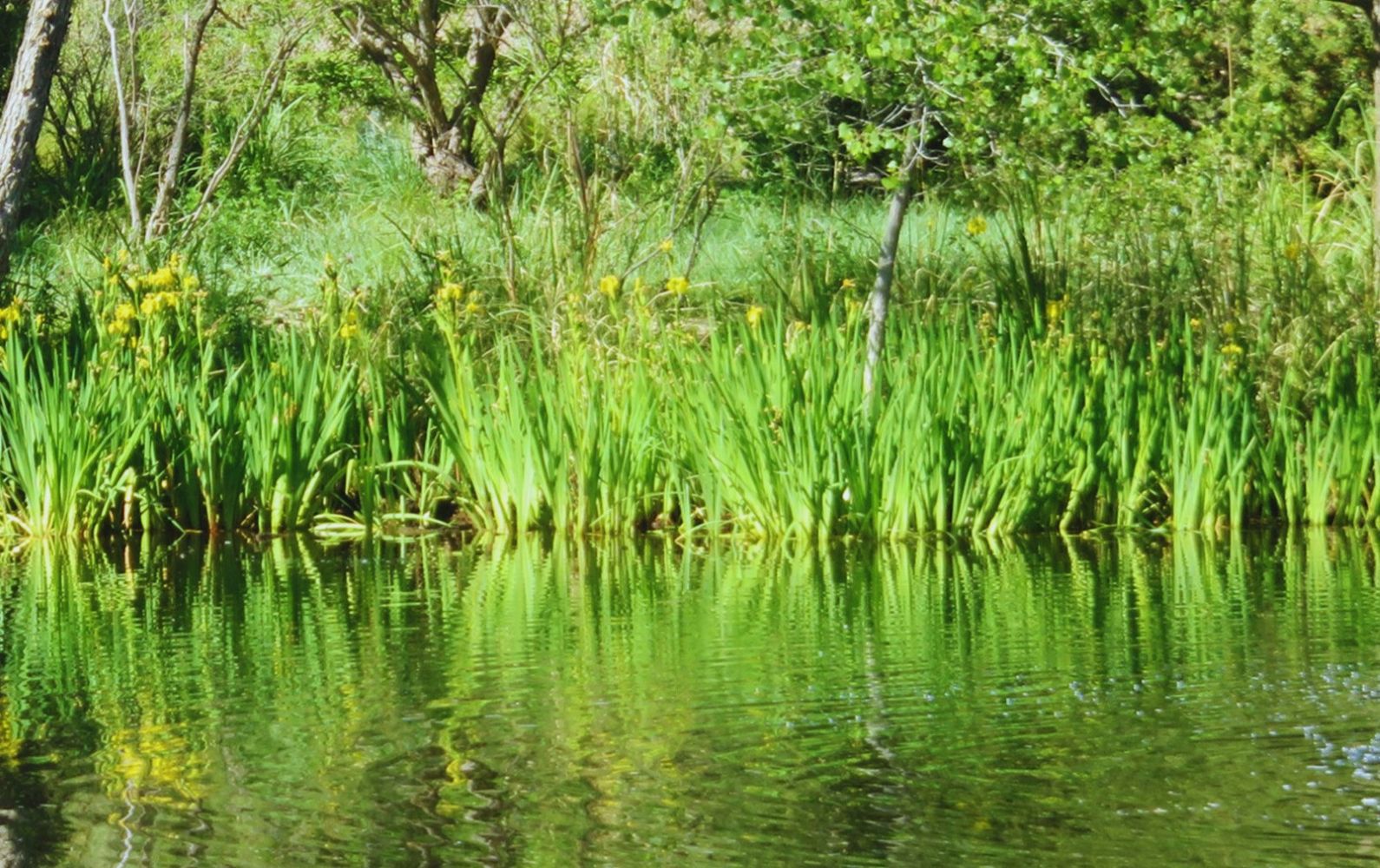
Close-up of the edge of a pond with lots of reeds and grass.

Restoration/mitigation programs should address all aspects of a site’s ecosystem, rather than simply enhancing a particular species or group of species. With this in mind, course material is designed to introduce a complete approach. Topics covered include restoration/mitigation planning; research needs; regulatory and permit coordination; early considerations of unanticipated effects, bioengineering, best management practices (BMPs), cost estimation, maintenance of the mitigation, provisions to be taken during all phase of the implementation to ensure success, and how to quantify success in terms of area and ecological function.

After completing this course, participants will be able to:
• Determine Regulatory Considerations for the planned restoration
• Understand Restoration / Mitigation Planning needs
• Determine suitable Site Conditions and Research Needs
• Understand Needs for Planting Plans
• Determine the Best Monitoring Methodologies
• Anticipate Maintenance Issues

Please wait to receive a course confirmation email, roughly one month prior to the class, before making any travel arrangements.

Intended audience

Biologists, landscape architects, planners, and environmental engineers. The course will be designed for those with limited to moderate amounts of experience in natural area management, natural resource management or in environmental permitting.

Prerequisites

A basic understanding of natural resource management.

CEUs
1.30
Course Topics
  •   Realistic Restoration/Mitigation Goals
  •   Background Research into Historic and Expected Site Conditions
  •   Regulatory and Planning Issues to Address
  •   Considerations of unanticipated effects (erosion, mosquito populations in created wetlands, drought/flooding, outside influences)
  •   Soil/Water Needs of Selected Vegetation
  •   Restoration/Mitigation Planning
  •   Responsibility of Participating Parties
  •   Pre-Restoration/Mitigation Implementation – Measures and Considerations
  •   Best Management Practices
  •   Estimations of Costs
  •   Implementation Monitoring
  •   Restoration/Mitigation Materials and Methods Selection
  •   Maintenance Methods, Anticipated and Unanticipated
  •   Development of Practical Monitoring Requirements
  •   Monitoring Techniques
  •   Performance Standards – What Can Be Realistically Expected.
  •   Protecting Your Investment: Measures for Long-Term
  •   Success of the Restoration/Mitigation Project
Course Materials
Each attendee will receive a syllabus with the course topics, descriptions, and considerations for undertaking restoration/mitigation topics.
What to bring

You will need a computer and internet connection, have your copy of the text available. 

Contaminant Vapor Migration and Intrusion

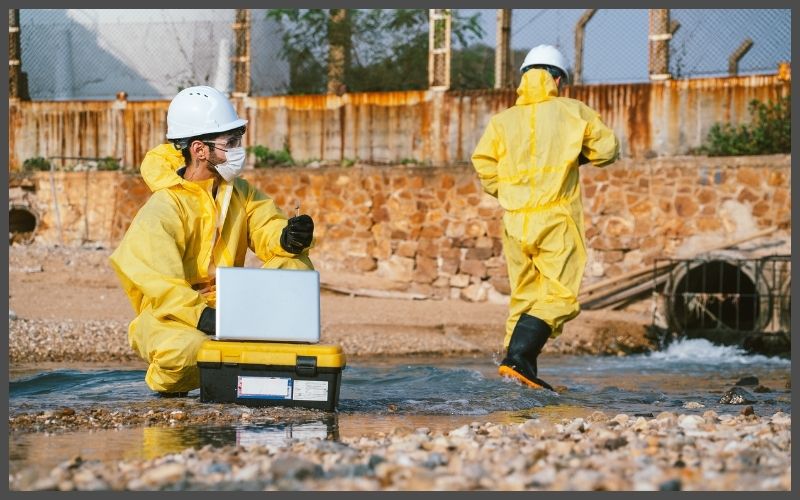
Two men in a construction yard gathering tests, wearing yellow suits

This course provides an overview of the vapor intrusion exposure pathway including its scientific foundation, regulatory framework, and the technical aspects of investigating and remediating contaminated vapor sites. The class will cover topics such as: screening sites for potential vapor intrusion concerns, conducting field investigations, sampling techniques, data analyses, exposure point calculations, the Johnson and Ettinger predictive model, vapor intrusion risk assessment, vapor intrusion mitigation, and remediation. Participants will work through practical problems and typical site scenarios based on case studies of established vapor intrusion sites. This course provides a comprehensive introduction for those new to the field, and will also provide insights, data analysis techniques, and the latest research for more advanced participants.

"This course was very organized and interesting...gave real life case studies that helped me understand the topics that were taught throughout the course." K. Erney, February 2013

"Thorough.  The instructor included references to local (state) guidance and its divergence from other VI guidance." C. Grover, February 2013

"I really liked how the instructor used state specific guidance and compared it to other states' + EPA guidance...the case studies were great - really illustrated the content of the course." R. Ridenour, February 2013

"The instructor is knowledgeable and very willing to engage students." D. Hammer, February 2013

"His extensive real world experience gave confidence in his knowledge." R. Timmins, August 2013

"Very good course overall very helpful as an introduction to VI.  Instructor very knowledgable and explained content in a very clear way." L. Galu, August 2013

Intended audience

Environmental professionals seeking an improved understanding of vapor migration and intrusion with an emphasis on vapor assessment and modeling. The material is intended for practitioners working on remediation of hazardous substance release sites and brownfields redevelopment.

Prerequisites

Basic math skills and a general understanding of contaminated sites.

CEUs
1.30
Course Topics

Overview and Definitions

  • Defining “volatile chemicals”
  • Migration pathways

Vapor Migration Issues

  • Human health risks
  • Universal nature of pathway
  • Mitigation/Remediation
  • Future property development/brownfields redevelopment 

Vapor Chemistry

  • 3 and 4 phase chemical partitioning
  • Partitioning as predicted by: Henry’s law, vapor pressure, and Raoult’s law

Vapor Physics

  • Diffusion
  • Fick’s law
  • Advection

Hydrogeology

  • Soils
  • Vapor permeability
  • Heterogeneities
  • Porosity (total, air-filled/water-filled)
  • Perched water
  • Preferential vapor migration

Biodegradation

  • Chlorinated VOCs
  • Petroleum hydrocarbons 

Building Design Issues

  • Foundation types
  • Space partitioning
  • HVAC systems

Regulatory Framework:

  • ITRC guidance
  • DTSC guidance & CHHSLs
  • RWQCB ESLs

Vapor Intrusion Investigations

  • Sampling techniques for groundwater, soil, subslab, and indoor air
  • Depth discrete
  • Temporary vs. permanent monitoring points
  • Analytical methods
  • Spatial temporal variability
  • Limitations
  • Correlation to indoor levels

Data Analysis and Interpretation

  • 90/95% UCLs
  • Using means
  • Partitioned buildings
  • Separation of ventilation systems 

Johnson and Ettinger Model

  • Types
  • Data needs
  • Parameter sensitivities
  • Accuracy
  • Value
  • Problems and limitations
  • Guidance

Case Studies

Vapor Mitigation Systems and Engineered Controls

  • Modified HVAC systems
  • Air treatment
  • Sub-slab depressurization (types, performance/reliability)
  • Vapor barriers (types, specifications)
  • Combination systems

Vapor Remediation

  • Source-zone treatment
  • SVE systems
  • Dual-phase
  • Demonstrating compliance
  • Off-gas treatment

Institutional Controls

  • Government controls
  • Propietary controls
  • Enforcement tools with IC components
  • Informational devices
  • Monitoring of ICs 

New Developments in Vapor Intrusion

  • Future of Johnson and Ettinger model
  • EPA databases
  • Correlation levels
  • Empirical vs. theoretical results
  • HVOCs vs. petroleum
  • EPA guidance and use of generic attenuation factors
  • Other vapor guidance


Course Materials
*Registered attendees will receive a PDF copy of course materials prior to the class. A hard copy may be requested for United States addresses.
What to bring

A computer with an internet connection. You may want your text available or pencil and paper to take notes.

ArcGIS PRO: An Introduction to Environmental Applications

This 3-day hands-on class introduces participants to the environmental applications of ESRI's ArcGIS 10 software. The course will build upon a discussion of general concepts and vocabulary to form a comprehensive overview of ArcGIS PRO’s functions and uses in the environmental field. Each participant will have their own computer workstation to create, edit, display and analyze real world environmental data during numerous hands-on exercises. On the third day, participants will have an opportunity to expand their skills by applying their knowledge to more complex and in-depth projects.


"Great overview of tools and tasks...Exercises were great at walking through and showing how each tool can be applied to real world situations."-Adam J, March 2014

"This course took me through a ton of useful information in just a short period of time, and the price was right!" Adam C, March 2014

"It is very applicable to my job duties, I will immediately be able to use these tools." -E. Moore, March 2013
 

"…very relevant to natural resource work. " -S. Miller, March 2013


After completing this course, participants will be able to:

  • Apply a conceptual overview of GIS and spatial analysis to environmental data
  • Understand and utilize the fundamental capabilities of ArcGIS
  • Conduct overlay analysis
  • Create intersects, buffers, unions and clips using the Geoprocessing Wizard
  • Measure spatial relationships between layers of geographic data
  • Perform complex relational database queries
  • Generate presentation-quality maps

Prerequisites: Basic understanding of computer operations.

*reduced tuition is available to employees of Native American tribes, government agencies, and nonprofits; students; and NAEP, NEBC, NWAEP members 

Please wait to receive a course confirmation email, roughly one month prior to the class, before making any travel arrangements.

Intended audience

This hands-on course is intended for environmental and graphics professionals involved in the collection, interpretation, and presentation of spatially related data. Attendees will learn the uses and capabilities of ArcGIS 10 by working first-hand on sample scenarios. Previous GIS experience is not required.

CEUs
2.00
Course Topics
Overview of ArcCatalog and ArcMap
Connecting to Data
Adding Layers
Working with Geographic Features
Feature Attributes within a Data Frame
Querying and Selecting Geographic Features
Editing Features
Working With CAD Drawings
Creating Summary Charts
Manipulating Tables
Creating Tables
Mapping Buffers
Symbolization
Adding Database Features
Layouts and Printing Maps
Basic On-Screen Digitizing/Georeferencing
Intro to Spatial Analyst Extension
Intro to 3D Analyst Extension


Course Materials

Attendees will receive a course manual containing workshop proceedings and reference material.

What to bring

Pen or pencil and paper to take notes. Drinks and light snacks will be provided. You will be on our own for lunch.  

Backpack Electrofishing: Principles and Practices

Electrofishing is an effective way to sample freshwater fish populations. However, it may cause injury or mortality to the fish if done incorrectly. Proper balance between efficient sampling and causing minimal harm is achieved through the knowledge of electrofishing principles and use of proper techniques.

This course combines classroom lecture with field demonstration/participation exercises to give attendees the knowledge and basic experience they will need to safely and effectively electrofish. It includes one day of classroom lecture with a field day during which the concepts discussed in class will be demonstrated and practiced by attendees. The class will visit a stream/river/creek and each attendee will operate the equipment under the guidance of the instructor.

The day of field exercises provides attendees with real-world experience applying the concepts discussed in the classroom. The combination of classroom lecture, field demonstration, and participation exercises gives attendees the knowledge and basic experience they will need to safely and effectively electrofish.

"I feel this course greatly improved my understanding of why electrofishing works" Anonymous, May 2015

“[This class provides] an excellent overview of the biological, environmental and technical considerations of e-fishing for all levels of experience. The electrofishing application in the “field” was very helpful for transfer of information and learning of topics discussed in the classroom.” B. McCrācken, June 2013


This three-day course is intended to meet the National Marine Fisheries Service (NMFS) training requirements for electrofishing field staff. The NMFS guidance and training requirements document may be downloaded here.

Reduced tuition is available to employees of Native American tribes, government agencies, and nonprofits, students, and AFS and NAEP members. 

Please wait to receive a course confirmation email, roughly one month prior to the class, before making any travel arrangements.

You may register via the registration button above or by calling the Northwest Environmental Training Center at (425) 270-3274.


Intended audience

This course is intended for biologists, field personnel, and other professionals seeking an improved understanding of the principles and techniques of electrofishing.

CEUs
2.10
Course Topics

Electric Circuits and Fields

  • Principles and terminology
  • Characteristics of AC, DC and pulsed DC waveforms
  • Power transfer
  • Electric field characteristics
  • Effects of size, shape, and spacing of electrodes
  • Water conductivity measurement
 

Fish Behavior and Welfare

  • Fish reactions in AC, DC, and pulsed DC fields
  • Attracting fish for capture
  • Causes and reductions of fish stress
  • Types and causes of fish injury
  • Reducing fish injury and mortality
  • Effects of electroshock on fish eggs and invertebrates
  • Obtaining permits for backpack electrofishing
 

Backpack Electrofishing Systems

  • System components
  • Types of equipment
  • Evaluating output
  • Troubleshooting problems
  • Understanding settings
 

Backpack Operations and Safety

  • Safe use of backpack electrofishing equipment
  • Common safety issues
  • Safety policies
  • Crew organization
  • Role of first aid and CPR training
 

Field Trip Exercises

  • Waveform output evaluation
  • Electrode resistance measurement
  • Electrical field mapping
  • Voltage threshold for fish capture
  • Fish capture techniques
  • Fish storage recovery, handling, and release
  • Field data requirements
 

Sampling Design and Applications

  • Goal-oriented designs
  • Factors affecting electrofishing efficiency
  • Use and validity of electrofishing data
  • Development of standardized power tables


Course Materials

Attendees will receive a course manual containing workshop proceedings and reference material.

What to bring

IMPORTANT (Snohomish, WA Course): Our field trip will be to Garden Creek that runs through the facility. You must bring your own gloves, waders, and wading boots but are not required to bring dip nets unless you wish. Snohomish County has issued a permit for the field trip, including the need for us to address the issue of inadvertent transport ofinvasive aquatic species on our equipment. Specifically, our gloves, waders, wading boots and dip nets must be decontaminated during the week prior to the course. If you use them within the week prior, they must be frozen for at least 12 hours and completely dried.”

Please bring a scientific calculator and a pen or pencil, and notepad if you would like to take notes (you may also choose to take notes in your book). We also recommend a laptop with Word, Excel and the ability to read PDF files. For the field, you will need chest waders or hip boots, and suitable outdoor clothing including rain gear. Depending on course location, you may also want to bring insect repellent.

We also recommend non-breathable waders


Lunch will be on your own, but drinks and snacks will be provided throughout the day.

Introduction to Aquatic Toxicology

This introductory course provides participants with a strong foundation of aquatic toxicology and how these concepts are applied to managing pollutants in aquatic environments. The course covers terminology, common test designs, and endpoints such as lethality and endocrine disruption. Important legacy and emerging pollutants of concern such as heavy metals, organic pesticides, PAHs, PCBs, PBDEs, pharmaceuticals, personal care products, and nanoparticles will also be presented. Fate and transport as it relates to bioavailability and pollutant partitioning in aquatic environments will be discussed. Water Quality criteria from the Clean Water Act with an emphasis on, and examples of, site specific criteria for metals using hardness correction, water effects ratio (WER), and the biotic ligand model (BLM) are also included.

After completing this course, participants will be able to:

  • Apply toxicology principles to environmental issues.
  • Understand how aquatic organisms are exposed to toxic chemicals.
  • Identify factors affecting toxicity.
  • Understand similarities and differences between the toxicity of metals and organic chemicals.
  • Understand modes of action of toxic chemicals, types of effects from the molecular to the ecosystem level, and detoxification processes.
  • Assess toxicity in terms of LC50 and EC50, and develop dose-response curves.
  • Identify the advantages and disadvantages of various toxicity testing methods.
  • Understand the scientific basis for and limitations of water quality standards.


"Allowed me to put together a lot of pieces of information and build on existing knowledge. Logical progression of material and good examples." Anonymous, Dec 2015

"The scientific knowledge and teaching methods of the instructor were fantastic. It was very interesting and collaborative which made it fun and interesting." Z. Froyland, March 2014

"Ruth explains things very well and is incredibly knowledgeable on the subject. She kept everyone interested and engaged." A. Kron, March 2014

"The course is an appropriate blend of new methods and technology with longstanding concepts and standards.  The approach of instruction engages attendees to use analytical tools introduced in problem solving then evaluates the value of the conclusion." B. Wanstall, April 2013

*Reduced tuition is available for Native American tribes, government employees, nonprofits, students and AFS, NAEP, NEBC, TAEP members.

You may register online or by calling the Northwest Environmental Training Center at (425) 270-3274. Online registration is strongly encouraged.

Please wait to receive a course confirmation email, roughly one month prior to the class, before making any travel arrangements.

Intended audience

This course is designed for professionals seeking a greater understanding of aquatic toxicology and for practitioners and agency personnel, including toxicologists, biologists, ecologists, hydrologists, planners and regulators involved with stream issues.

Prerequisites

Some college-level biology and chemistry coursework is required (even if it was a long time ago). A fundamental understanding of aquatic ecology is also helpful.

CEUs
1.30
Course Topics
  • Classes of toxic chemicals (carcinogens, mutagens, teratogens, and others).
  • Sources of toxic chemicals entering the aquatic environment.
  • Exposure pathways for aquatic organisms.
  • Biological, physical, and chemical factors affecting bioavailability and toxicity.
  • Bioaccumulation, bioconcentration, and biomagnification.
  • Modes of toxic chemical action, including enzyme inhibition and endocrine disruption.
  • Types of toxic effects: biochemical, molecular, physiological, behavioral, population, and community.
  • Toxicity testing methods: acute and chronic, single and multiple species.
  • Laboratory assessment of toxicity: LC50, EC50, NOEC, LOEC, MATC, and dose-response curves.
  • Development and use of water quality standards.
  • Field application of toxicology using the biomarkers.
Course Materials

*Registered attendees will receive a PDF copy of course materials prior to the class. A physical book can be purchased for an additional $50 charge. To purchase, select "Physical Book" above. If choosing the "E-Book" option, note that you must bring a device to view the PDF to class.

What to bring

Drinks and snacks will be provided each day. Lunch will be on your own. If you have choosen the "E-Book" option, note that you must bring a device to view the PDF to class.

Boat Electrofishing: Principles and Practices

Electrofishing is an effective way to sample freshwater fish populations. However, electrofishing may cause fish injury or mortality. Proper balance between efficient sampling and minimal harm is achieved through the knowledge of electrofishing principles and proper use of the techniques and equipment available.

This two-day course will cover the principles and practices for boat electrofishing through one classroom days and one field day during which the concepts discussed in class will be demonstrated and practiced by attendees. The class will be taken on an electrofishing equipped craft, and each person will have the opportunity to practice using the boat-based electrofishing system.

This field day exercise provides attendees with real-world experience applying the concepts discussed in the classroom. The combination of classroom lecture, field demonstration, and participation exercises gives attendees the knowledge and basic experience they will need to safely and effectively electrofish.

"Learning about the theory behind shocking made understanding the techniques much easier. The course felt cohesive, and the order in which subjects were presented made for easy comprehension." James C., May 2016

"I liked how the instructor showed us how the principles of the course could be applied practically to our sampling." Anonymous, May 2016

"Great information for operating electrofishers & background understanding of how they work and why." Mollie O., May 2016

"This seems to be a good course for both beginners and experienced e-fishermen...I appreciated the calibration of the boat to illustrate the concepts in class. Also, the feedback session on the third day helped/answered real world questions." George S., May 2016

The NMFS guidance and training requirements document may be downloaded here.

You may register online or by calling the Northwest Environmental Training Center at 425-270-3274.

Please wait to receive a course confirmation email, roughly one month prior to the class, before making any non-refundable travel arrangements.

Reduced tuition is available for Native American tribes, government employees, nonprofits, students and AFS, NAEP, NEBC, TAEP members.


Intended audience

This course is intended for biologists, field personnel, and other professionals seeking an improved understanding of the principles and techniques of electrofishing.

CEUs
1.30
Course Topics

Electric Circuits and Fields

  • - Principles and terminology
  • - Characteristics of AC, DC and pulsed DC waveforms
  • - Power transfer
  • - Electric field characteristics
  • - Effects of size, shape and spacing of electrodes
  • - Water conductivity measurement

Fish Behavior and Welfare

  • - Fish reactions in AC, DC and pulsed DC fields
  • - Attracting fish for capture
  • - Causes and reductions of fish stress
  • - Types and causes of fish injury
  • - Reducing fish injury and mortality
  • - Effects of electroshock on fish eggs and invertebrates
  • - Obtaining permits for boat electrofishing

Boat Electrofishing Systems

  • - System components
  • - Types of equipment
  • - Evaluating output
  • - Troubleshooting problems
  • - Understanding settings
  • - Safety features

Boat Operations and Safety

  • - Safe use of boat electrofishing equipment
  • - Common safety issues
  • - Safety policies
  • - Crew organization
  • - Role of first aid and CPR training

Field Trip Exercises

  • - Waveform output evaluation
  • - Electrode resistance measurement
  • - Electrical field mapping
  • - Voltage threshold for fish capture
  • - Fish capture techniques
  • - Fish holding, handling, and release
  • - Field data requirements

Sampling Design and Applications

  • - Goal-oriented designs
  • - Factors affecting electrofishing efficiency
  • - Use and validity of electrofishing data
  • - Development of standardized power tables


Course Materials

Attendees will receive a course manual containing workshop proceedings and reference material.

What to bring

Please bring a scientific calculator and a pen or pencil, and notepad if you would like to take notes (you may also choose to take notes in your book). Lunch will be on your own, but drinks and snacks will be provided throughout the day. Lunch will be provided on the field trip day. 

Facilitation Skills For Environmental Professionals

This two-day course provides a core program of theory, discussion and practice designed to develop attendees' basic and more advanced facilitation skills.


Facilitation skills are used to form productive teams, plan programs, and to implement controversial projects. Trained facilitators help groups communicate productively, constructively manage diverse points of view, and create concrete actions as a result of meetings. It is also a personally satisfying experience when you, as the meeting facilitator, bring out the best in the people in a meeting and can help a team improve its performance.
 

After reviewing basic facilitation skills such as how to set up a meeting for success (writing objectives, sharing agendas, etc.), the instructor will introduce and provide opportunity to practice techniques for facilitating groups with specific goals. For example, certain methods are utilized when answers need to be generated, and others are used to facilitate groups that need to make decisions. In addition, time will be allocated to practice techniques to handle difficult behaviors.

A study by Microsoft® pointed to worthless meetings as a major time waster in America. Respondents in their survey spend 5.6 hours each week in meetings and 71 percent of these people think those meetings “...aren’t productive.” Good meetings don't just happen. 

Leaders with outstanding facilitation skills are key to turning this wasted time into meetings that produce results.

This course is intended for anyone who wants to increase their personal effectiveness and have greater influence over the work they do in groups.

Government folks (managers and staff) need at minimum these basic skills." Heidi C. Dec 2015

"The idea that meeting prep is necessary and shows respect to your attendees should be on all hosts minds" Debbie S. Dec 2015

"The training and materials have given me a much-needed orientation toward respectful and effective facilitation rather than just plowing through an agenda as rapidly as possible. I’ve already been using several of the techniques, and your training has made me a better meeting participant when I’m not facilitating. And I loved the music!" G. Husak, April 2015

"I thought it was the best course on facilitation that I have taken"  A. Dirnberger, April 2015

“The range of skills and tools that were taught that cover from pre-meeting planning through meeting wrap up and post meeting work.  Great ideas and techniques that will come in handy in lots of situations.” S. Johnson, May 2013

" [The class was] great, [insructor was] calming, made for a very safe environment.  I tend to be very nervous and I felt comfortable!" L. McNearney, March 2013


Additional Discounts for registering related courses: There is an additional $50 discount when registering for either Collaborative Negotiation Skills for Environmental Professionals OR Conflict Resolution Skills for Environmental Professionals when they are offered in the same week. The two registrations must be made at the same time to get the discount. There is an additional $100 discount when registering for all three classes when they are offered the same week. Registration for all three classes must be made at the same time. 

*Reduced tuition is available for Native American tribes, government employees, nonprofits, students and AFS, NAEP, NEBC, TAEP members.

You may register online or by calling the Northwest Environmental Training Center at (425) 270-3274. Online registration is strongly encouraged.

Please wait to receive a course confirmation email, roughly one month prior to the class, before making any travel arrangements.

Intended audience

This course is intended for scientists and resource managers who must plan, facilitate or manage meetings or anyone interested in learning facilitation skills. The skills learned in the class are applicable to work groups and project teams, larger staff groups, interdisciplinary teams, multiagency groups, and public meetings. 
Past attendees have included senior scientists, technical committee chairs, project leaders, executives, managers, supervisors, technical staff, and clerical, seasonal, and contract employees.

CEUs
1.30
Course Topics
Perspectives
Why doesn’t everyone think like me?

Meetings
Different meetings for different needs

Roles and Responsibilities -
Who wears what hat?

Planning Meetings
Assessing needs, objectives, and purpose

Process and Content
The two parts of effective meetings

Logistical Considerations
The right room, the right set up

Basic Facilitator Skills
Verbal and nonverbal communication skills
Maintaining rapport
Framing, reframing, and paraphrasing
Managing personal states of being
Basic Facilitation Processes and Their Use
Use the right process
Agenda
Ground rules
Open participation
Presenting information
Collecting information
Analyzing information
Decision making
Closing the meeting
Evaluation

A Facilitator’s Tool Kit
Tools that make meetings better and easier

Managing Group Dynamics
Tracking and assessing audience needs

Skills Practice and Feedback
Creating a safe place to explore

Discussion on Challenges
How to prevent or deal with problems


Course Materials

Attendees will receive a course manual containing workshop proceedings and reference material.

What to bring

Please bring a pen or pencil, and notepad if you would like to take notes (you may also choose to take notes in your book). Lunch will be on your own, but drinks and snacks will be provided throughout the day.