
Habitat Restoration Webinar Series: Planning and Implementing a Successful Restoration Plan
**This is a download of 6 recorded two-hour webinar sessions. The download includes the full content of the live sessions and the course material bookets in .pdf format.**

Course material can be downloaded immediately after payment is made. Registrants will receive a certificate of completion and continuing education units (CEU's) via email approximately 14 days after purchase.

Part 1: Creating A Restoration Plan: (6 hours, 3 sessions) Habitat restoration/mitigation programs should address all aspects of a site’s ecosystem, rather than simply enhancing a particular species or group of species. With this in mind, the course material is designed to introduce a complete approach. Attendees will learn to assess site needs, and to create a plan that addresses them using the complete approach. However, since there are times when restoration/mitigation is needed to address specific species, such as special-status or game species which may require specific adaptations, attendees will also learn how to create a species specific restoration/mitigation plan.

In addition, attendees will learn the methods of determining debits for impacts and credits for mitigation. An outline for writing restoration/mitigation plans will be presented, which is as “bullet-proof” as possible in terms of providing sufficient information for gaining any necessary approvals and for implementing the plan. 

Topics covered include determining goals; the background research needs necessary to determine the appropriate type and feasibility of restoration; restoration/mitigation planning processes (soil and hydrology, and planting plan considerations); regulatory and permit consideration; early considerations of unanticipated effects/adaptive management, bioengineering possibilities, best management practices (BMPs), buffers to minimize outside disturbances, climate change considerations, engineering considerations, cost estimations, and a method to determine success criteria.

Part 2: Implementing a Successful Restoration Plan: (6 hours, 3 sessions)

This webinar provides participants with an overview of the implementation of a successful habitat restoration/mitigation program, and expands to an examination of recommendations for necessary and innovative restoration techniques and monitoring.

Attendees will learn the short and long term management techniques of successfully implementing an approved habitat restoration/mitigation program plan. Attendees will also learn the importance of personnel management and involvement. Because everyone involved in implementing habitat restoration plans takes their cues from the project manager, those managers who take a personal interest in the project have a higher success rate of meeting performance standards.

Lectures will focus on the varying aspects of habitat restoration implementation, including but not limited to topics such as: logistics, start-up procedures, contract management, bioengineering, vegetation management; early considerations of unanticipated effects with adaptive management procedures, best management practices (BMPs), short- and long-term monitoring, and how to quantify success in terms of ecological structure and function.

Intended audience

Biologists, landscape architects, planners, and environmental engineers. The course will be designed for those with limited to moderate amounts of experience in natural area management, natural resource management, or in environmental permitting.

CEUs
1.20
Course Topics

Part 1: Creating a Restoration Plan

After completing this course, participants will be able to:

·       Develop realistic restoration goals

·       Determine background/baseline conditions for potential restoration/mitigation

·       Determine regulatory considerations for the planned restoration

·       Understand restoration planning needs

·       Determine suitable site conditions and research needs

·       Understand needs for soil conditioning, hydrology/irrigation needs, and planting plans


Part 2: Implementing a Successful Restoration Plan

After completing this course, participants will be able to:

• Understand the logistics planning required in habitat restoration implementation

• Utilize personnel effectively

• Understand soil management, irrigation methods, and vegetation management

• Understand invasive species management and integrated pest management

• Utilize the Best Monitoring Methodologies, and

• Understand when adapted management is needed.


Course Materials

Attendees will receive a .pdf of the webinar course booklet.

What to bring

This is a download of a recording of a previously presented webinar.
Facilitating Remote and Online Meetings-Essential Success Skills

**This course will be presented online as a live webinar in three 2-hour sessions. Sessions will be recorded and will be available to all enrolled attendees. All paid registrants will receive a certificate of completion of 0.6 CEU's**

All sessions will be from 10 a.m.-noon Pacific (11 a.m. to 1 p.m. Mountain) (noon to 2 p.m. Central) and (1-3 p.m. Eastern).

Group discounts are available. Please call 425-270-3274 ext 103 for more information.

This webinar is being presented by Sustainable City Networks and NWETC

Facilitating Remote and Online Meetings – Essential Success Skills provides a practical model and extensive toolkit for designing and facilitating online meetings.

This course offers specific strategies you can use immediately to create a participatory environment where all attendees are providing ideas, remaining engaged, and contributing to the meeting’s success. Attendees will learn how to merge their existing facilitation skills with online technology to manage meetings effectively even when you cannot get people together in the same room.

If you have a geographically dispersed audience but need greater collaboration and teamwork, this course is for you.

If your job is facilitating groups but travel problems get in the way, this course is for you.

If you already have a lot of online meetings but are not satisfied with their productivity, this course is for you.

All attendees will receive prepared material, demonstrations of online facilitation techniques and tools, and access to resources you can use after the course.

At the end of this course you will be able to,

  • Design and implement a facilitation that is appropriate for the online environment.
  • Pick and use the online meeting support tools that are a best fit for the purpose of your meeting.
  • Manage the group discussion and teamwork to ensure forward momentum to arrive at a definitive closure.
  • Manage participation to keep everyone engaged and ‘on task’.

Why Take This Course?

This webinar will equip you with knowledge and tools for creating and facilitating online meetings to share information, evaluate options, or decide something.  You will learn how to tackle some of these common challenges:

  • Adapt face-to-face techniques with appropriate online techniques and technology.
  • Keeping remote participants engaged.
  • Minimizing distractions and multi-tasking.
  • Collecting feedback from remote participants.
  • Managing people when you can’t see non-verbal cues.
  • Bringing the online meeting to closure and getting a clear decision.

For additional information, see these articles by instructor Michael Fraidenburg:

Good Practices for Interactive Online Meetings, Tips for Successful Online Facilitation, Getting Meetings Off to a Good Start

Registrants will be emailed webinar login information after registration is processed.

Intended audience

This course is designed for:

  • Facilitators who need to add online meeting facilitation to their tool kit
  • Professionals who lead meetings in which all or a portion of the participants are offsite
  • Trainers who need to get everyone ‘on the same page’
  • Supervisors, managers, and project managers responsible for teamwork when the team can’t work at the same location
CEUs
0.60
Course Topics
  • Introduction.Why meet online?
  • Characteristics of an online meeting.
  • Challenges of facilitating online meetings.
  • Planning an online meeting.
  • Good management behaviors for online meetings.
  • Tools to make your facilitation more successful.
  • Generative Facilitation - Online facilitation techniques when you have to generate new material.
  • Evaluative Facilitation – Online facilitation techniques when you have to evaluate and compare options.
  • Decision Facilitation – Online facilitation techniques when you have to get a group to decide something.
  • How to get teamwork done via online methods.
  • How to get planning and organizing done via online methods.
  • Evaluating online meetings.
  • Best management practices tips.
Course Materials

Attendees will receive a .pdf document containing workshop proceedings and reference material.

What to bring

In order to best view, listen to, and participate in this webinar, we recommend a computer set up able to display two websites at the same time; either two windows on the same screen or two separate monitors (best), and an audio headset that includes a microphone (refrain from using a desk-top microphone).

Writing a Quality Assurance Project Plan (QAPP)

This hands-on course is intended for anyone who needs to write QAPPs for water quality projects, without spending excessive hours writing and revising an unnecessarily complicated planning document.  Attendees will learn and become comfortable with the concepts, structures, and background materials needed for composing the QAPP, and the tools to turn what might be an overwhelming task into one that can be completed in a reasonable amount of time with a reasonable amount of effort. 

With the instructor’s help, participants will perform customized exercises, working through one or more different QAPP templates that are provided to meet individual student needs. The instructor will share tips and tricks that go far beyond available on-line guidance; students will learn how to correctly and efficiently complete the template. This hands-on approach, with plenty of opportunities for questions and personalized answers, will help students come up to speed quickly without the doubts, slow responses, and steep learning curves inherent in self-taught or even the best on-line class systems.

Students are expected to come to the class with a basic understanding of the role of quality assurance and quality control in developing and conducting an environmental program for water quality monitoring.  Comfort in using programs such as Microsoft Word and Excel will be beneficial in getting the most of the class.

If you have any trouble registering please call (425) 270-3274 ext 103

Please wait to receive a course confirmation email, roughly one month prior to the class, before making any travel arrangements. 

Intended audience

This course is recommended for representatives of Native American Tribes, state environmental regulators and personnel who develop, review, implement or use QAPPs, or personnel who have to communicate QAPPs, including, but not limited to remedial project managers, on-scene coordinators, site assessment managers, RCRA facilty managers, enforcement personnel, state and tribal regulators, quality assurance personnel, contractors and oversight officers, field task managers, and laboratory personnel

CEUs
0.70
Course Topics

1 Quality Management Planning and Implementation

a.     Quality Assurance Overview

b.     Common Elements of the UFP and EPA QAPP Structures

                                               i.     Setting Data Quality Objectives

                                              ii.     Regulatory Compliance

                                             iii.     Identifying Responsible Personnel

c.      QAPP Drivers

                                               i.     Phase I Investigations

                                              ii.     Remediation and Feasibility: Cost Assessments

                                             iii.     Risk Assessment

d.     Understanding Data Quality Indicators

                                               i.     Precision

                                              ii.     Accuracy

                                             iii.     Representativeness

                                             iv.     Reproducibility

                                              v.     Completeness

2 Efficiently Writing the QAPP

a.     Collecting Foundation Materials

b.     Measurement Performance Criteria

                                               i.     Field Quality Control (QC) Samples

                                              ii.     Laboratory QC Samples

                                             iii.     Method Requirements

                                             iv.     Making QA Guidance Work for You

c.      Implementation of Drivers into the QAPP

d.     The Devil is in the Details

                                               i.     Laboratory SOPs, LOQs, and MDLs

                                              ii.     Target Quantitation Limits

                                             iii.     Controlling the Structural Elements

                                             iv.     Coupling the QAPP and the Field Sampling Plan

3 Making the QAPP work for you

a.     Organizational Efficiency

b.     Communication Pathways

c.      Bottle Orders

d.     Performing Data Assessments

Course Materials

Attendees will receive a course manual containing workshop proceedings and reference material.

What to bring

Pen or pencil, and paper if you do not want to take notes in your manual. Drinks and snacks will be provided. Lunch will be on your own.

When the Heat is On: Persuasive Speaking on Environmental Risk, Controversies, and High-Stakes Topics

**Note - This course is now offered exclusively using live stream remote attendance. You will need a computer and an internet connection. We will continue to monitor the situation surrounding COVID-19 closely.  When it is deemed safe to reconvene group gatherings, we will resume our in-person class offering as usual.  If you would like more information or have any questions, please contact us via email or phone 425 270 3274.

Every time you open your mouth, you are managing two reputations: your personal reputation and the reputation of your organization. Whether you are presenting to stakeholders, clients, elected officials, or the media, you need to speak convincingly, with confidence, and with credibility. This course will help you gain the edge in difficult speaking situations.

This two day class is designed to develop skills for making prepared and impromptu presentations, especially for situations that may be controversial or highly charged. This course will help you gain the edge in difficult speaking situations and provide you with tools to effectively communicate environmental risk-related and other controversial issues to a broad range of audiences. Even when there is mistrust and anger in the room, with these skills you can  build trust and credibility for you and your organization.

Through lecture, sharing, practice, exercises, role-plays, and demonstrations, you will learn communication techniques that excite, inspire and persuade. Position yourself and your organization as the thought leader on your topic by learning the techniques taught in this workshop.  Do not miss the chance to improve your communications by getting valuable, hands-on advice so that the next time you get up to speak, your audience will STOP, LOOK, and LISTEN.

The first day focuses on communication skills for occasions when there is time to prepare in advance of an event, such as a formal briefing or prepared speech.

The second day focuses on the advanced skills for making impromptu presentations. You will learn how to present yourself and your information in the best possible way with techniques used by professional speakers.

Over the course of the sessions, attendees will learn five impromptu speaking models and stagecraft techniques used by professional speakers.  These are designed to help you think on your feet and to quickly articulate your thoughts-vital skills, especially in communicating about environmental risk and other controversial, hot topic issues.

Environmental professionals have important information and an important message for stakeholders and decision makers. Make sure prepared statements are clear and confident, and ‘spur of the moment’ communications stick in the minds of your audience.  Come prepared to learn from the instructor and learn from one another in a highly interactive and fun workshop where you will get the chance to practice and receive helpful coaching to improve your personal skill set.    

"Instructor is clearly skilled in the field and adept at conveying the material." J. Corwin

"Michael was knowledgeable, entertaining, and struck a great balance between presenting to us and hands-on participation. I enjoyed this class!" Ian S.

"Good variety of topics & tools, so even if one tool doesn't seem applicable, others will be. Good participation methods for attendees." Anonymous

"Great instructor! Lots of great information delivered well!" C. Marchand


Intended audience

This course is suitable for a wide variety of professionals including environmental risk managers, EPA personnel, regulators and/or media stakeholders, pubic involvement agencies, remedial project managers, installation environmental program managers, technical experts, engineers, scientists, health and safety personnel, natural resource personnel, environmental planners, public affairs officers, attorneys, and others who are called upon to communicate in difficult environments and who need to persuade when doing so.

CEUs
1.30
Course Topics

The focus for Day 1 is communication skills for those occasions when there is time to prepare in advance of the event. Day 1 covers:

  • Having open discussions on controversial topics such as environmental risk management.
  • The reasons why environmental risk and other controversies present unique and difficult communication challenges. 
  • Audience analysis.
  • Developing effective formal briefings (using three different models).
  • Writing effective one-page briefing sheets.
  • Delivering a motivational speech when you need to inspire action.
  • Individual practice sessions reinforcing skills learned.

Day 2 focuses on skills for occasions when you have to speak 'in the moment'. 

  • Setting up presentations in a public meeting for success.
  • Five models for handling impromptu speaking, especially when yours is a ‘hot’ topic.
  • Handling the media interview.
  • PowerPoint® and other media skills that work. 
  • Stagecraft and non-verbals that professional speakers use.
  • Practice sessions reinforcing the skills learned.
Course Materials

Attendees will receive a course manual containing workshop proceedings and reference material.

What to bring

Pen or pencil and paper to take notes if you do not want to write in your manual. Drinks and snacks will be provided each day. Lunch will be on your own.

Risk Communications: Persuasive Communication Skills for Environmental Professionals-One Day

The person who will define the future will be the person whose message sounds like the most sensible way forward-make sure that person is you.

Everytime you open your mouth, you are managing your and your company's or agency's reputation. Whether you are presenting to stakeholders, clients, elected officials, or the media, you need to speak persuasively and with confidence and credibility. This course provides attendees with tools to effectively communicate environmental risk-related issues to a broad range of audiences. Attendees will learn how to gain the edge in a difficult presentation, even when there is mistrust and anger in the room

Set yourself apart with communication skills designed to create and deliver presentations about environmental risk management that inspire, excite, and persuade—no matter who is in the audience.  Attendees will learn to communicate effectively in a politically charged environment, confidently communicate key messages, and to build trust and credibility through their communications. 

Through lecture, sharing of experiences, role-plays, and demonstrations, attendees will learn techniques professional speakers use.  Participants will also be abe to design and deliver a portion from one of their controversial presentations and receive valuable coaching from the instructor and peers. 

Do not miss the chance to help you improve your communications by getting valuable, hands-on advice so that the next time you get up to speak, your audience will STOP, LOOK, and LISTEN.

Note: This one day course is for attendees to learn communication skills for occasions when they have time to prepare their presentations in advance of their speaking event.

Please see the two day course for learning communications skills for occasions when you have to speak 'in the moment'. Having the ability to articulate your thoughts and think on your feet is a vital skill, especially in communicating environmental risk related issues. The second day will provide the skills for attendees to communicate confidence and competence to others in impromptu situations and to present themselves and their informatioin in the best possible way. 

Special format: Participants can take just the first day or both days of instruction, depending on their specific job related roles and responsibilities.  Participating in the first day is prerequisite for taking the second day. This course is the one day course. Please see the link to the right for the Two Day course. 

See Course Topics under More Information below for topics covered.

*Reduced tuition is available to employees of Native American tribes, government agencies, nonprofits, students and NAEP members.

You may register online or by calling the Northwest Environmental Training Center at (425) 270-3274. Online registration is strongly encouraged.

Please wait to receive a course confirmation email, roughly one month prior to the class, before making any travel arrangements.

CEUs
0.70
Course Topics

Day One: Course attendees will learn communication skills for those occasions they have time to prepare their presentations in advance of their speaking event.  Day One course covers:


  • Having open discussions on environmental risks.
  • The reasons why environmental risk presents unique and difficult communication challenges. 
  • Audience analysis.
  • Developing effective formal briefings (using three different models).
  • Writing effective one-page briefing sheets.
  • Delivering a motivational speech when you need to inspire action.
  • Individual practice sessions reinforcing skills learned.
Course Materials

Attendees will receive a course manual containing workshop proceedings and reference material.

What to bring

Pen or pencil, and paper if you do not want to take notes in your manual. Drinks and snacks will be provided throughout the day. Lunch will be on your own.

Risk Communications: Persuasive Communication Skills for Environmental Professionals-Two Day

The person who will define the future will be the person whose message sounds like the most sensible way forward-make sure that person is you.

Everytime you open your mouth, you are managing your and your company's or agency's reputation. Whether you are presenting to stakeholders, clients, elected officials, or the media, you need to speak persuasively and with confidence and credibility. This course provides attendees with tools to effectively communicate environmental risk-related issues to a broad range of audiences. Attendees will learn how to gain the edge in a difficult presentation, even when there is mistrust and anger in the room

Set yourself apart with communication skills designed to create and deliver presentations about environmental risk management that inspire, excite, and persuade—no matter who is in the audience.  Attendees will learn to communicate effectively in a politically charged environment, confidently communicate key messages, and to build trust and credibility through their communications. 

Through lecture, sharing of experiences, role-plays, and demonstrations, attendees will learn techniques professional speakers use.  Participants will also be abe to design and deliver a portion from one of their controversial presentations and receive valuable coaching from the instructor and peers. 

Do not miss the chance to help you improve your communications by getting valuable, hands-on advice so that the next time you get up to speak, your audience will STOP, LOOK, and LISTEN.

Day One: Course attendees will learn communication skills for occasions when they have time to prepare their presentations in advance of their speaking event.  

Day Two: Course attendees will learn communications skills for occasions they have to speak 'in the moment'. Having the ability to quickly articulate your thoughts and think on your feet is a vital skill, especially in communicating environmental risk related issues. Attendees will learn to communicate confidence and competence to others in impromptu situations and will learn to present themselves and their information in the best possible way. 

Special format: Participants can take just the first day or both days of instruction, depending on their specific job related roles and responsibilities.  Participating in the first day is prerequisite for taking the second day. This is the two day course. Please see the link to the right for the One Day course. 

See Course Topics under More Information below for topics covered each day. 


*Reduced tuition is available to employees of Native American tribes, government agencies, nonprofits, students and NAEP members.

You may register online or by calling the Northwest Environmental Training Center at (425) 270-3274. Online registration is strongly encouraged.

Please wait to receive a course confirmation email, roughly one month prior to the class, before making any travel arrangements.

CEUs
1.30
Course Topics

Day One: Course attendees will learn communication skills for those occasions they have time to prepare their presentations in advance of their speaking event.  Day One course covers:


  • Having open discussions on environmental risks.
  • The reasons why environmental risk presents unique and difficult communication challenges. 
  • Audience analysis.
  • Developing effective formal briefings (using three different models).
  • Writing effective one-page briefing sheets.
  • Delivering a motivational speech when you need to inspire action.
  • Individual practice sessions reinforcing skills learned.


Day Two: The second day instruction is for occasions when you have to speak in the moment. Each attendee will learn how to present themselves and their information in the best possible way. In Day 2 course covers:


  • Setting up presentations in a public meeting for success.
  • Five models for handling impromptu speaking, especially when yours is a ‘hot’ topic.
  • Handling the media interview.
  • PowerPointâ skills that work. 
  • Stagecraft and non-verbals that professional speakers use.
  • Individual practice sessions reinforcing skills learned.
Course Materials

Attendees will receive a course manual containing workshop proceedings and reference material.

What to bring

Pen or pencil, and paper if you do not want to take notes in your manual. Drinks and snacks will be provided each day. Lunch will be on your own.

Groundwater Contamination and Remediation: Principles and Practices

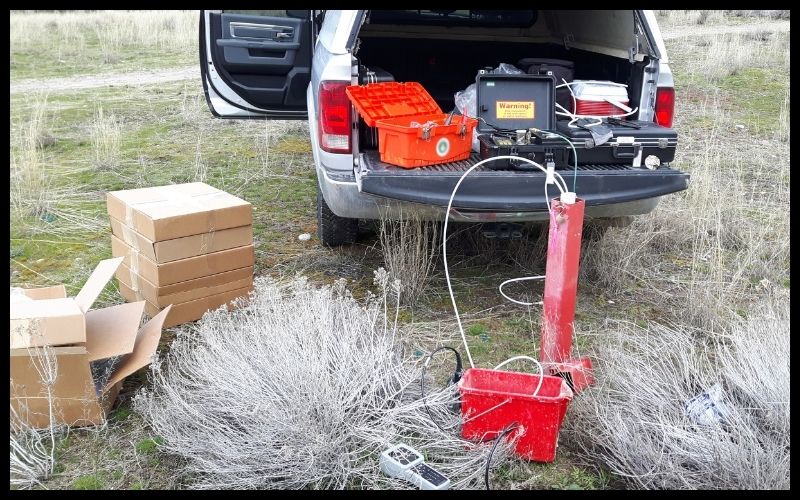
Back of a truck parked on the ground with a variety of testing supplies set up

In this course, attendees will learn the basic principles of contaminant geohydrology, fate and transport, and groundwater remediation. This course will cover the scope of the groundwater contamination problem in the United States, the drivers that mandate addressing these problems, and the technical constraints and practical solutions to remediate these problems. Participants will be exposed to basic concepts of hydrogeology and contaminant transport in groundwater.

Participants will also learn the status of remedial technologies employed by remedial practitioners to cleanup groundwater contaminated with the most common inorganic, organic and persistent contaminants such as fuel hydrocarbons, metals, 1,4 dioxane, perchlorates and chlorinated hydrocarbons. Case studies and active engagement with the attendees will be used to reinforce the points presented in lecture. Understanding the topics covered will provide attendees with a current and better-informed perspective on the practice of groundwater investigation and remediation. 

"[This course provides a] good overview of remedial technologies, including course studies." J. Mefford, December 2013

"Good short course for introduction. Very good technical knowledge of chemistry [and] geology modeling." A. Kar, December 2013

CEC's: 13 Technical CEC's


If you have any difficulties or questions regarding registration please call 425-270-3274 ext 100.

Please wait to receive a course confirmation email, roughly one month prior to the class, before making any travel arrangements.

Intended audience

This course is refresher training for scientists and engineers engaged in remedial planning and implementation and as a comprehensive overview of regulations, policies, and remediation practices for non-technical facility managers, municipal planners, real estate developers, and attorneys that employ environmental remediation professionals to support their respective projects and clients. 

CEUs
1.30
Course Topics
  • Groundwater Contamination Problem Definition
  • Drivers that Mandate Action
  • The Importance of Conceptual Site Modeling
  • Basic Hydrogeological Concepts
  • Common Organic Contaminants
  • Common Inorganic Contaminants
  • Contaminant Fate and Transport in Groundwater
  • Overview of Remedial Technologies for Organic Contaminants in Groundwate
  • Overview of Remedial Technologies for Inorganic Contaminants in Groundwater
  • Case Studies of Groundwater Contamination


Course Materials

Attendees will receive a course manual containing workshop proceedings and reference material.

What to bring

Pen or pencil, and paper if you don't want to take notes in your manual. In person courses will have drinks, lunch and snacks provided as current health recommendations allow. 

Brownfield Site Restoration and Remediation

In this 1-day course, attendees will learn what characterizes a “Brownfield” project, how it differs from a conventional “Greenfield” real estate transaction, and why it would be desirable for a public entity or private investor to pursue a Brownfield.

Participants will learn the components of a Brownfields transaction, what legal pathways are available through individual state programs to certify site closure, and a review of state-specific Voluntary Cleanup Program (VCP) cleanup processes.  Participants will come away with better understanding of the critical due diligence tasks that are necessary to complete a successful Brownfield transaction included legal, real estate, environmental, financing, risk transfer (insurance).  Case studies and active engagement with the attendees will be used to reinforce the points presented in lecture.

Understanding the topics covered will provide attendees with a current and better-informed perspective on the actual risk and reward afforded to individual investors and public entities that are motivated to produce a win-win financial reward and public benefit


"[The instructor] explains the subject matter very well. Pertinent & understandable." C. Stolle, March 2014

"I appreciated how he encouraged class participation. It was a great way to hear other applications of the topics." Anonymous, March 2014

"I found it very informative because of interaction and questions answered in class." Anonymous, March 2014


*Reduced tuition is available for Native American tribes, government employees, nonprofits, students and AFS, NAEP, NEBC, TAEP members.

You may register online or by calling the Northwest Environmental Training Center at (425) 270-3274. Online registration is strongly encouraged.

Please wait to receive a course confirmation email, roughly one month prior to the class, before making any travel arrangements.

Intended audience

This course is intended for municipal planners, policymakers, and permitting officials who desire to have a basic working knowledge of what constitutes a Brownfield so that they are able to encourage and facilitate private and public redevelopment investment in their communities.  The course is also intended to educate real estate developers and their attorneys and environmental consultants that perceived environmental risks for Brownfields are often significantly greater than the actual risks, and that the perceived risks often stymie redevelopment unnecessarily. 

CEUs
0.70
Course Topics
  • Brownfield vs. Conventional Real Estate
  • Environmental Due Diligence
  • Regulatory Options
  • Voluntary Cleanup Program 
  • Legal Review
  • Real Estate
  • Entitlements
  • Proforma
  • Financing Options – the “Capital Stack”
  • Risk Management – Environmental Insurance
  • Environmental Investigation and Remediation
  • Case Studies
Course Materials

Attendees will receive a course manual containing workshop proceedings and reference material.

What to bring

Pen or pencil, and paper if you do not want to take notes in your manual. Drinks and snacks will be provided each day. Lunch will be on your own.

Visualizing and Analyzing Environmental Data with R

**Note - For every course we have implemented live stream remote attendance .  You will need a computer and an internet connection.  

This course is designed for participants who wish to gain beginning to intermediate skills in using R for manipulating, visualizing and analyzing their environmental or ecological data.  R is a comprehensive statistical programming language that is cooperatively developed on the Internet as an open source project. This freely available statistical package R is a powerful tool and is projected to become the most widely used statistical software.

This class uses datasets complete with errors you get practice taking real field data into R, through hands-on using instructor-led examples. It is applicable to anyone that conducts environmental monitoring or uses environmental or ecological data for research, management, or policy-making and is recommended for anyone needing to become proficient with R basics.  Being proficient in R will help participants be competitive in their chosen fields.

"Provided a solid foundation yet linkages to allow one to delve deeper into more advanced topics." C. Lynch, October 2013

"Very good introduction to R, gained familiarity with data types and data manipulation." B. McGuire, October, 2013

"Provided a lot of information covering how to do many things in R.  the book will serve as a good tool using R in the future." P. Kusnierz, October, 2013

"There were excellent course materials.  I will be using the manual as a reference for along time to come." T. Kantz,  September, 2013

"Hands-on learning; great instructor who knows the subject and the data; excellent camaraderie among the students." T. Kahler, September, 2013


After completing this course attendees will be able to:

  • Understand the uses of R for working with environmental or ecological data
  • Installing R and R libraries
  • Import and export data from Excel
  • Sorting, merging, and aggregating, subsetting, and converting data
  • Query and display data and generate basic data summaries
  • Create a variety of high quality data visualization graphics
  • Perform common statistical tests including t-tests, ANOVA, and  linear models
  • Develop basic scripts to automate and document procedures and analyses

Please note that attendees will need to have a laptop to class with the R software program. Instructions on how to download the program will be emailed out prior to the class. Installations must be completed prior to class - please contact us if you are having problems.

*Reduced tuition is available for Native American tribes, government employees, nonprofits, students and AFS, NAEP, NEBC, TAEP members.

You may register online or by calling the Northwest Environmental Training Center at (425) 270-3274. Online registration is strongly encouraged.

Please wait to receive a course confirmation email, roughly one month prior to the class, before making any travel arrangements.

Intended audience

This course is beneficial for anyone desiring to become proficient in the basics of data manipulation, high quality plotting and graphing, and data summary and statistical analyses using R; researchers, students, data analysts, etc. 

Prerequisites

Familiarity with basic statistical concepts and methods as used in the natural and social sciences. 

CEUs
1.30
Course Topics
  • Installing R and R libraries
  • Reading and writing data (read(), write()) and viewing R data sets
  • Creating  new variables and recoding or renaming variables
  • Manipulating data (order(), merge(), aggregate(), t(), which())
  • Summarizing data (sapply(), summary(), table(), xtabs())
  • Visualizing data (par(), plot(),hist(), points(), line(), barplot(), pie(), boxplot())
  • Statistical analysis (cor(), t.test(), lm() and regression diagnostics)
  • R programming basics (program control and user defined functions)
Course Materials

*Registered attendees will receive a PDF copy of course materials prior to the class. A hard copy may be requested for United States addresses

What to bring

A laptop with the R software program. A computer with an internet connection. Pen or pencil and paper to take notes if you wish. 

Collaborative Negotiations and Conflict Management for Environmental Professionals

This dynamic, hands-on workshop gives attendees an understanding of effective ways to deal with difficult situations and difficult people.  Discussions, exercises, lectures, and mock negotiation make this workshop interactive, fun, and productive, and provide extensive practice with skills that can be applied immediately.

Attendees will learn collaborative negotiations skills that will allow them to look out for their own interests and preserve positive working relationships to use in the future. Participants will learn how to turn negotiations that contain conflict into a more positive dynamic of collaborative problem-solving.

This workshop is distinguished by its focus on how participants can simultaneously advocate for their interests while consciously diagnosing and managing the conflict that surrounds their issue. Conflict gets in the way of collaborative negotiations, and adding these conflict management skills to any negotiator or facilitator’s tool kit can increase the chances of success.

The principles covered are a combination of interest-based bargaining (win-win negotiations) with the skills mediators use for getting people to resolve disputes. It is built on the proven premise that negotiations and conflicts involve multiple dimensions of interests.  Attendees will learn easily applied principles and a straightforward model to plan and engage in negotiations effectively, even when there is conflict.

*Note: This course is especially helpful for teams from the same organization.  When colleagues attend the program together the organization benefits not only from these employees gaining skills but also from shared knowledge they can use to ‘team-up’ and support one another, or act as in-house consultants able to give advice to other employees.

Attendees will learn how to:

• Suspend judgment and diagnose what is causing conflict
• Facilitate quality, respectful communications
• Engage disputants in a search for common values
• Analyze conflict styles and how to deal with anger
• Balance power differences
• Apply a simple, but effective conflict resolution model
• Use the three features of durable agreements
• Prepare for a negotiation
• Identify the complex undercurrents in any negotiation and react to them
• Understand the interests that drive negotiating behaviors and therefore, desired outcomes
• Apply questioning techniques to uncover each party’s negotiating interests and use that information to create solutions
• Create solutions that preserve and enhance relationships that are essential for success in a team-oriented environment or an outside provider/client relationship


"Most people like myself prior to the class know the informal ways of negotiating, with the course you learn formal ideas on the subject."  Sisay A. November 2015

"This was a great class. the best part was the role playing and follow up after...I really feel like I am walking away with new, incredibly valuable skills." A. Childs, May 2014


Please wait to receive a course confirmation email, roughly one month prior to the class, before making any travel arrangements.

Intended audience

• Professionals who are trusted to work independently resolving challenging, non-routine situations,

• People who must possess the ability to advocate for an organization’s interest and, at the same time, build positive future relationships with the other people in the negotiation, or

• Those who are progressing in their career toward assuming the above leadership responsibilities.

Past attendees: Agency executives, mid-managers, regional biologists, species management experts, land managers, scientific team leaders, cross-agency coordinators, citizen participation experts, supervisors, environmental specialists, and regional directors/supervisors.

CEUs
1.30
Course Topics


Collaborative Negotiations

·      Situation Assessment

·      Preparing to Negotiate

·      Managing the Negotiation

Conflict Management

·      Diagnosing Conflict

·      Creating Flexibility and Options

·      Creating Durable Agreements


Course Materials
*Registered attendees will receive a PDF copy of course materials prior to the class. A hard copy may be requested for United States addresses.
What to bring

Pen or pencil to take notes and paper if you do not want to write in your manual.