

Basic Hydrology

In this course, we will define, explain and correctly use terms and concepts of basic hydrologic processes including evaporation, transpiration, precipitation, infiltration, ground-water flow and surface runoff. We will understand the hydrologic cycle and the ways that humans impact hydrology including erosion, sedimentation, and contamination. We will solve basic hydrologic problems to estimate the magnitude and frequency of hydrologic events. We will learn methods to measure flow and discharge rates. Examples will be included from real environmental problems. 

Intended audience

Environmental professionals in a wide range of careers including habitat restoration, environmental sampling, and construction. 

CEUs
1.40
Course Topics

Water and hydrology background

Hydrological cycle

Soil properties and water

Aquifers, wells, water table

Measurements - discharge, flow rate, peak, Ordinary high water mark

Human impacts to hydrology

Course Materials

.

What to bring

Pen or pencil to take notes and paper if you do not want to take notes in your manual.  Drinks and snacks will be provided each day and lunch will be on your own.

Managing Difficult Workplace Conversations

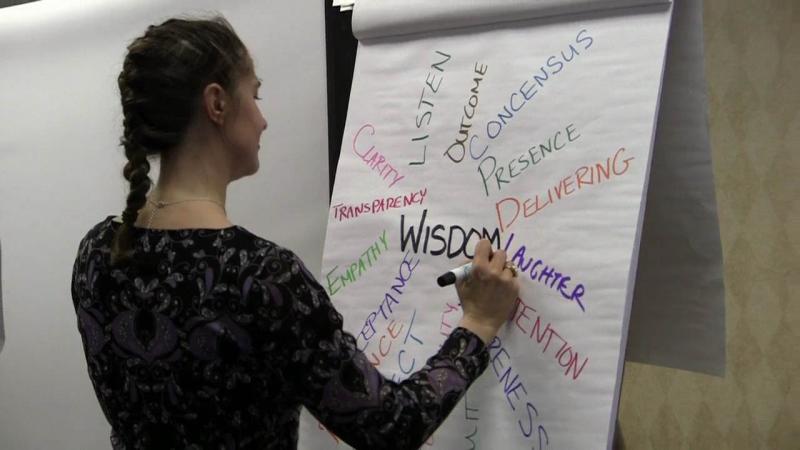
In this one-day session, attendees will gain an understanding of how to recognize situations that can lead to difficult interactions with co-workers and stakeholders, and how to navigate them with sensitivity and respect when they do arise. Through lecture and activities, participants will gain experience putting the strategies and techniques presented into practice, allowing them to immediately make use of the new skills. 

CEUs
0.70
Course Topics

In this one-day session, attendees will gain an understanding of how to recognize situations that can lead to difficult interactions with co-workers and stakeholders, and how to navigate them with sensitivity and respect when they do arise. Through lecture and activities, participants will gain experience putting the strategies and techniques presented into practice, allowing them to immediately make use of the new skills. 

Course Materials

Attendees will receive a PDF containing workshop proceedings and reference material.

What to bring

Drinks and snacks will be provided. Lunch will be on your own.

Facilitation Skills and Collaborative Negotiation Training for Environmental Professionals

This course combines concepts and material from NWETC's Facilitation Skills for Environmental Professionals and Collaborative Negotiation Skills for Environmental Professionals. A basic agenda of the topics covered is:

Negotiation

1. How to get a group who is negotiating a compromise to re-direct the course of the negotiations when you are a team member and when you have special knowledge of a desired income.

2. How to identify and advocate for your own interests in a negotiation without bargaining from a fixed position (i.e., how to be a source of creative solution finding that can help a group move forward in your direction).

Facilitation

3. Meeting Leadership Skills - How to design and lead a meeting that maximizes the chance of producing a concrete and tangible deliverable (e.g., a decision, white paper, analysis, recommendation).

4. Meeting Participation Skills - How to lead from behind in a meeting (i.e., when you are a meeting participant, not leader, how to diplomatically re-direct the course of a meeting when it goes off track or is at risk of becoming unproductive).

Problem Management

5. How to manage problem behaviors in a negotiation or in a facilitation.

6. How to get closure and a definitive decision in a negotiation or meeting.

Intended audience

Past attendees include: Agency executives, mid-managers, regional biologists, species management experts, land managers, scientific team leaders, cross-agency coordinators, citizen participation experts, supervisors, environmental specialists, and regional directors/supervisors.

CEUs
1.40
Course Topics

Negotiation

1. How to get a group who is negotiating a compromise to re-direct the course of the negotiations when you are a team member and when you have special knowledge of a desired income.

2. How to identify and advocate for your own interests in a negotiation without bargaining from a fixed position (i.e., how to be a source of creative solution finding that can help a group move forward in your direction).

Facilitation

3. Meeting Leadership Skills - How to design and lead a meeting that maximizes the chance of producing a concrete and tangible deliverable (e.g., a decision, white paper, analysis, recommendation).

4. Meeting Participation Skills - How to lead from behind in a meeting (i.e., when you are a meeting participant, not leader, how to diplomatically re-direct the course of a meeting when it goes off track or is at risk of becoming unproductive). 


Problem Management

5. How to manage problem behaviors in a negotiation or in a facilitation.

6. How to get closure and a definitive decision in a negotiation or meeting.

Course Materials

Attendees will receive a PDF containing workshop proceedings and reference material.

What to bring

N/A

Wetlands: Science and Regulatory Management

A photo of a flooded wetland surrounded by trees

The objective of this 2-day course is to provide attendees with an overview of wetlands and wetlands management. 

The course will touch on the regulatory basis for the protection of wetlands in the United States, including a discussion of recent and attempted changes to wetland regulation.  In addition, there will be an overview of the methods used to delineate the boundaries of wetlands, as well as a summary of the various methods used to perform functional assessments.  Special focus will be given to the strategies and approaches to developing Nationwide and Individual Permits under the U.S. Army Corps of Engineers Section 404 regulation.  Additionally, there will be detailed discussions on the planning and execution of wetlands mitigation projects.

Course Testimonials:

“Really good broad overview to the various aspects of the wetlands permitting, regulatory, & mitigation process. Perfect for a professional like me who is familiar with wetlands concepts while wanting to learn specifics and how to’s.”Dave G. Oct 2016

“There was a great balance of breadth & depth for the course topic. It touched on a wide variety of areas pertaining to wetlands and their regulation under the CWA. The course gave me the background info & context to better understand wetlands management and mitigation. Chuck did a great job presenting the context & incorporating his wealth of experience in the field of environmental consulting and wetlands mitigation/permitting.” Angie F. Oct 2016


Intended audience

This course is intended for environmental professionals involved in wetlands management such as consultants, regulators, lawyers, and those in technical/scientific positions.

CEUs
1.40
Course Topics
  • Introduction
  • Overview of wetlands
    • What makes a wetlands?
    • Why are wetlands important?
  • Regulatory framework
    • Federal 404 process
    • State regulations
    • Local and County regulations
    • Association with other regulations – NEPA; ESA; NHPA
    • Recent developments in regulations
  • Wetlands delineation
    • Overview of the three-parameter process
    • Historical approaches to delineation
    • USACOE Wetlands Delineation Manual and Regional Supplements
  • Functional Assessments
  • Wetlands Permitting
    • Nationwide versus Individual Permits
    • Strategic approaches to permitting
    • Permit components
  • Wetlands mitigation
    • Approaches to mitigation
  • Wetlands Construction – Restoration/Creation
    • Initial Steps
    • Planning and design – key elements
    • Construction approaches
    • Planting
    • Use of ecological/habitat enhancements
    • Monitoring
  • Special Wetland Topics
  • Conclusion
Course Materials
*Registered attendees will receive a PDF copy of course materials prior to the class. A hard copy may be requested for United States addresses.
What to bring

A computer with an internet connection. You may wish to have your text available and pencil and paper to take notes.

Microsoft Excel Up to Speed Parts 1 and 2

Someone working at a laptop showing a spreadsheet

**This course was presented as a live webinar in 2015 in six 2-hour sessions. **

Purchase includes 10 files:

  • Audio/Video recording of six 2-hour sessions,
  • Two course workbooks,
  • Exercise packets for each part

Many people use Excel every day yet barely scratch the surface of what they can accomplish with this powerful program. 

In Part 1, users will learn to utilize Shortcuts, Functions, and Charts, and explore all of the hidden tools that are at their disposal.

After completing Part 1, participants will be able to:

  • Understand intermediate to advanced uses of Microsoft Excel beyond the simple data table
  • Feel comfortable exploring and using functions and recording macros
  • Leverage charting, Sparklines, PivotTables and PivotCharts for data visualization and trend analysis
  • Gain proficiency in using power shortcuts and recording macros that will save time.

In Part 2, the focus is on Analysis and Visual Basic Programming. Excel comes packaged with lots of tools specifically designed to speed up analysis and auditing tasks, yet many people never know how to use them, or that they even exist in the first place. During this section, users will learn how to incorporate these workhorse tools into their Excel repertoire.

After completing this course, participants will be able to:

  • Install and use the Analysis Toolpak to perform common statistical analysis of their data.
  • Perform auditing and data validation tasks to help clean messy data sets and provide reliable results
  • Learn the basics of using the Visual Basic editor to create custom routines and automate tasks.
Intended audience

This course is beneficial for any professional who works with a large amount of data, and needs to improve their Excel skills to be able to make the most of the power of the software. Past attendees include environmental managers, engineers, field staff, scientists, and government agency staff.

Prerequisites

Basic understanding of Microsoft Office software and basic computer skills are required.

CEUs
1.20
Course Topics

Part 1

  • Macros
  • Pivot Tables
  • Pivot Charts
  • Charting
  • Sparklines
  • Dates & Times
  • Shortcut Keys & Power Techniques
  • Formulas
  • Auditing and Scenarios

Part 2

  • Analysis Toolpak
  • Data Validation
  • QA / QC
  • Visual Basic Overview
  • Pairing Excel with Microsoft Access

Basic Statistics for Environmental Professionals

Various charts and graphs superimposed over a picture of a mountain and forest

In this two-day course, the principles of statistics as applied to the analysis of environmental data will be discussed, with as little mathematical detail as possible. Examples will be drawn from environmental applications. These examples will demonstrate the results of different techniques, giving attendees a greater understanding of situations when each of the various techniques for environmental data analysis should be used.

Topics and techniques discussed will include:

  • Statistical Principles & Probabilistic Data Models
  • Sample Design
  • Estimating Means, Medians & Variances& Other Parameters
  • Dealing with Non-detects
  • Fitting Data to Distributions
  • Functions of Random Variables
  • Statistical Intervals
    • Confidence Intervals
    • Tolerance Intervals
    • Prediction Intervals
      • Parametric Methods
      • Non-Parametric Methods
  • Hypothesis testing
    • Parametric
    • Non-Parametric
    • Bootstrapping & Randomization
  • Analysis of variance
  • Linear regression
  • Logistic regression
  • Contingency tables
  • Statistical graphics
  • Multivariate methods
Intended audience

This course is intended for environmental professionals who have the need to analyze data using various statistical methodologies. The course is intended to familiarize attendees with commonly used statistical techniques, without using an overwhelming amount of mathematical detail.

Prerequisites

Some basic understanding of environmental data sets and analysis is helpful.

CEUs
0.60
Course Topics
  • Statistical Principles & Probabilistic Data Models
  • Sample Design
  • Estimating Means, Medians & Variances& Other Parameters
  • Dealing with Non-detects
  • Fitting Data to Distributions
  • Functions of Random Variables
  • Statistical Intervals
    • Confidence Intervals
    • Tolerance Intervals
    • Prediction Intervals
      • Parametric Methods
      • Non-Parametric Methods
  • Hypothesis testing
    • Parametric
    • Non-Parametric
    • Bootstrapping & Randomization
  • Analysis of variance
  • Linear regression
  • Logistic regression
  • Contingency tables
  • Statistical graphics
  • Multivariate methods
Course Materials
Attendees will receive a PDF booklet containing workshop proceedings and reference material.

NEPA: Writing and Evaluating an EIS or EA/FONSI

Preparing and evaluating Environmental Assessments (EAs)/Findings of No Significant Impact (FONSIs) and Environmental Impact Statements (EISs) is a complex task, and many agencies use contractors to prepare their NEPA Documents. But when those draft documents are submitted, agency staff must review and comment on them, attempting to ensure that the documents prepared by other agencies or their contractors have the necessary content.

This NEPA training course provides the tools needed to review and evaluate the content of NEPA documents, whether prepared by contractors, other agencies, or in-house. There will be a comprehensive introduction for those new to NEPA and a refresher for more experienced professionals. Materials are also relevant to writers of NEPA documents. Illustrative examples will come from excerpts of real-life EAs/FONSIs and EISs.

Emphasis is on the FONSI in particular, but all findings in general; alternatives, both those included and those that may safely be left out; a workable approach to what are called “cumulative impacts”. All materials are modeled according to statutes, regulations, andwinning case law. A major theme is emphasis on using plain language.

Attendees will gain an immensely useful set of tools to answer the question frequently asked when draft documents are received: “Is this thing any good?” The answer will be “Yes”, if it looks like the statutes, regulations, and winning case law.

The instructor is Owen Schmidt, author of NEPA Models and Case Lists as well as a number of other NEPA-related publications, and the instructor for NWETC’s courses titled NEPA: Writing the Perfect EA/FONSI or EIS and Advanced NEPA.

*Reduced tuition is available to employees of Native American tribes, government agencies, nonprofits, students and NAEP members. You may register online or by calling the Northwest Environmental Training Center at (425) 270-3274.

Please wait to receive a course confirmation email, roughly one month prior to the class, before making any travel arrangements.

Intended audience

This course is designed for anyone who reviews, comments on, revises, plans, or writes NEPA documents, including (EAs)/Findings of No Significant Impact (FONSIs) and Environmental Impact Statements (EISs). Agency personnel or contractors who have any part in the NEPA planning, feedback, and re-writing process will benefit from this course.

CEUs
1.30
Course Topics

Day 1:

  • NEPA Primer: Basics/Overview
  • The Finding of No Significant Impact in particular
  • The proposed action and alternative actions: Purpose and need in plain language; Projects versus programmatic decisions; How to review the question of
    alternatives for EAs and EISs
  • Alternatives: proposed action, alternative action, no action

Day 2:

  • Impact assessment: cumulative impacts, direct and indirect impacts; connected, cumulative, and similar
    actions: How to review the assessment and comparison of environmental consequences in EAs and EISs
  • Lessons learned: Case Studies (Cube-set payloads…desire to maximize payloads, “~last minute” loading of launch vehicles with small payloads
    in “cube-sets”, NEPA exposure if anomalous? What is adequate NEPA process, public notice…etc? Case study overview & lessons learned from “NEPA Gone Wrong,” the federal Mineral Mining Service (MMS) and the Deepwater Horizon disaster. CEQ report overview of the MMS NEPA treatment of what they did and didn’t do right, consequences -MMS loss of mission & dissolution…evolving to the Bureau of Ocean Energy Management (BOEM), and post MMS changes/improvements at BOEM regarding NEPA. Any lessons learned, changes to our procedures & documents we should be looking at within NASA and FAA – licensing of commercial Spaceports and launch cycle? NASA using “ACME” rocket companies for Govt payload launches to ISS…astronauts next…NEPA treatment…recent NASA Wallops Island, MD commercial launch Space-X, (with NASA re-supply payload).
Course Materials

Attendees will receive a copy of the course book, and downloadable files containing real NEPA documents and more reference material.

What to bring

Drinks and snacks will be provided each day. Lunch will be on your own.

Environmental Forensics-Site Characterization and Remediation

Two scientists in protective gear taking samples

**Note - For every course we have implemented live stream remote attendance.  You will need a computer and an internet connection.  

If you would like more information or have any questions, please contact us via email or phone 425 270 3274.  


This 2 day course will provide attendees with a wide array of analytical techniques available to fingerprint a variety of contaminants and to address the basic questions involved in any environmental forensics study:

1. What is the contaminant(s)?

2. What is the source(s)?

3. When did the release occur?

4. Is the contaminant degrading?

In addition, there will be a discussion of why certain techniques are more appropriate than others, the problems that may be encountered when interpreting results, and what to do if there are no unique answers to some of the above questions. Examples will be provided from a variety of environmental forensic investigations involving a range of contaminants and different issues that have been encountered.

Attendees will learn the range of supporting methods used into order to prepare the strongest case possible when presenting findings.

The final topic will center around site remediation and how some of the techniques used in topics discussed above can also be used to monitor site cleanup, particularly those sites being remediated by natural attenuation.

This course is certified by Texas Commission on Environmental Quality (TCEQ) for 14 hours of continuing education credit.

Intended audience

This course will provide useful information for chemists, engineers, geologists, hydrogeologists, microbiologists, attorneys and regulators that are involved with a variety of environmental issues including contamination characterization and source determination as well as site remediation

CEUs
1.40
Course Topics
  • Environmental Forensics-Past and Present
  • Initial characterization of the site-groundwater flow, oxicity, salinity
  • Information needed for a successful investigation
  • Classes of Contaminants to be discussed
  • The tiered fingerprinting approach
  • Inorganic contributions to fingerprinting
  • Additional information required for successful environmental investigations
  • Age dating of contaminants-successful and unsuccessful techniques-including presence or absence of certain compounds, atmospheric contaminants, radioactive isotopes, tree-ring dating
  • Monitoring site remediation-most appropriate techniques.
  • Natural attenuation
  • Case Histories
  • State specific cases
Course Materials

*Registered attendees will receive a PDF copy of course materials prior to the class. A hard copy may be requested for United States addresses.

What to bring

You will need a computer with an internet connection. You may wish to have your text available and pencil and paper to take notes.

Effective Speaking When The Heat is On

In this one day class, you will learn how to get your audience to STOP, LOOK, and LISTEN, even if they don’t want to.  Whether you’re speaking to clients, employees, stakeholders or the media, you need to speak with authenticity, confidence and passion.  Even when there is mistrust and anger in the meeting room, the skills you learn in this course will help you gain the respect and attention of the group.  National Speakers Association member Michael Fraidenburg will teach you how to deliver your message using speaking models that are designed to persuade.

Benefits Environmental Professionals often need to make themselves heard above many other voices competing for attention. Knowledge and expertise is often not enough to show credibility, so adding persuasive speaking skills to your work will help you stand out as unique, and make your message stick. The person whose speech is the clearest and most sensible will define the way forward-make sure that person is you!

Learning Persuasive Speaking will help you:

  • Convince listeners to act on your message, 
  • Inspire groups to accept change, 
  • Reply to challenging questions with tact, diplomacy, and effectiveness, 
  • Know what to say and how to say it when just giving information is not enough, and 
  • Be remembered for the right reasons after your presentation is over.

During the session we also touch on effective platform and non-verbal skills to establish and maintain your credibility as a speaker who has an important message worth listening to.  Through lecture, sharing of experiences, role plays, and demonstrations you will learn these techniques you can begin using right away. Come prepared to learn and practice how to create a persuasive presentation every time you speak.

See the Course Topics Section for more details.

Intended audience

This course is recommended for a wide variety of professionals including environmental risk managers, EPA personnel, regulators and/or media stakeholders, pubic involvement agencies, remedial project managers, installation environmental program managers, technical experts, engineers, scientists, health and safety personnel, natural resource personnel, environmental planners, public affairs officers, attorneys, and others who are called upon to communicate in difficult environments and who need to persuade when doing so.

Prerequisites

None

CEUs
0.70
Course Topics

Over the course of the day, you will learn to maximize personal impact in decision making, make your message stick, and connect with audiences in a way that builds a genuine sense of trust and rapport, even if the message is not the most positive news.  How?  By learning seven speaking models you can use, beginning the day after the training.

You will Learn to make prepared remarks that inform and convince using proven skills professional speakers use to create and deliver messages in the following formats:

1. Motivational speeches

2. Briefings

And how to deliver impromptu remarks when you do not have time to plan ahead using the simple but effective speaking models of:


3. PPF (Past, Present, Future),

4. OREO (Opinion, Reason, Example, Opinion),

5. DID (Description, Implications, Direction),

6. UFO (Unite the group; Focus the group; and Organize the group), and

7. HOV (Higher Order values)

Course Materials

Attendees will receive a course manual containing workshop proceedings and reference material.


What to bring

Be prepared for interactive role playing exercises. Drinks and snacks will be provided each day. Lunch will be on your own.

Fundamental Contaminant Chemistry in Soil and Groundwater

**If this course has Remote Live Attendance -- USA as the location, it is a live stream remote course. You will need a computer and an internet connection. 

**If this course has a city and state as the location, we will be attempting to hold the course in-person at the listed location with course times listed in the host city's time zone; however, due to gathering restrictions and health concerns, NWETC reserves the right to convert this course to a live remote streaming course. If you would like more information or have any questions, please contact us via email or phone 425 270 3274. 

Note: Course image above is of the Berkeley Pitt in Butte Montana where the groundwater is exposed due to past mining operations from what is one of the largest superfund sites in the country. Photo Credit: Pamela Schultz

* Also, see our companion course "PFOS, PFAS, PFOA, and Emerging Contaminants". 

This two-day course includes an overview of key chemistry concepts associated with environmental contamination and provides a foundation for understanding contaminant fate and transport. The concepts discussed are essential for understanding soil and groundwater contamination along with the selection of appropriate remediation approaches.

The course begins with a review of basic chemistry concepts that are built upon as more complex topics are introduced. The first day includes a fundamental chemistry overview, covering chemical structure, properties, and reactions for metals and organic chemicals.  On the second day, characteristics of subsurface systems are discussed along with detailed descriptions of contaminant transport and degradation mechanisms.

A key goal of the class is for participants to become comfortable with the terminology and parameters used in environment chemistry and contaminant transport literature and studies. Concepts are illustrated using examples and historical context. For some examples, participants will use calculators. Spreadsheet models are provided to those interested in using simplified contaminant transport models. Major uncertainties and limitations of modeling approaches will also be discussed.

"Excellent speaker, very intense knowledge and passionate for the subject material.  Great Job!"- J. Collins, April 2013, Helena, MT

"Pamela obviously has a lot of knowledge and experience in this field.  She answered questions to the best of her abilities, and presented interesting information.  She was easy to follow and understand."  - H. Zrucky, April 2013, Anchorage, AK

"The course had a very logical progression with the necessary chemistry refresher which was fairy comprehensive and provided a base for the groundwater concepts to follow."- J. Akielaszek, September 2013, Albany, NY

"I have not taken a chemistry course for 16 years and the instructor did an excellent job of explaining concepts applicable to my profession." 
- J. Sawetz, November 2013, Bellevue, WA


Intended audience

This class is extremely useful for anyone looking to update, expand, and refresh their knowledge of environmental chemistry in relation to soil and groundwater contaminants.  The course material will greatly enhance on-the-job training and is also recommended for project managers seeking a more thorough understanding of contaminant behavior.  This subject matter is useful for scientists and engineers who would like to better understand contaminant fate and transport and provides a solid understanding of why certain contaminants are especially recalcitrant and difficult to remediate.  This understanding will guide professionals when evaluating remedial options for contaminated sites.

Prerequisites

Some college level chemistry is required (even if it was a long time ago).

CEUs
1.30
Course Topics

Part 1:  Chemical Structure.  This section covers chemical structure from atomic to molecular scale. Concepts of polarity and electronegativity are introduced and interactions between molecules are discussed. The basic rules of chemical nomenclature are also reviewed.


Part 2:  Chemical Properties.  Several chemical properties are introduced that are relevant to chemical fate such as solubility and partitioning coefficients. Sources of data are discussed along with uncertainties.


Part 3:  Chemical Contaminants.  Major contaminant groups are discussed including metals and organic compounds. The relationship between metal speciation and properties is illustrated through example. Chemical structures for organic molecules are reviewed. The interplay between structure and properties is highlighted throughout.


Part 4:  Chemical Reactions.   This section introduces the concepts of chemical reactions and products.  Acid-base and oxidation-reduction reactions are discussed in detail.  The concepts of pH and pE are explained.  Dissolution and partitioning reactions are also discussed.


Part 5:  Characteristics of Subsurface Systems.  The purpose of this section is to understand the meaning and magnitude of subsurface parameters required by groundwater contaminant transport models. Properties of subsurface systems and their impact on chemical transport are discussed.


Part 6:  Contaminant Transport.  Phenomena are discussed that influence the movement and fate of dissolved phase contaminants in groundwater. The impact of advection, dispersion, sorption, and chemical reactions are discussed in an incremental fashion.


Part 7:  Nonaqueous Phase Liquids.  In this section, the movement and dissolution of nonaqueous phase liquids (NAPLs) is explained. Relevant fluid properties such as interfacial tension are explained. Single and multicomponent NAPLs are discussed.  


Part 8:  Hydrocarbons.  This section discusses mixtures of hydrocarbons in more detail such as gasoline and diesel fuel. Biodegradation mechanisms are discussed along with geochemical indicators of degradation and natural attenuation.


Part 9:  Chlorinated Hydrocarbons. Chlorinated compounds are discussed in more detail with a focus on chlorinated solvents such as tetrachloroethene (PCE) and trichoroethene (TCE). Degradation mechanisms are discussed along with geochemical indicators of degradation.


Part 10:  Metals.  Metal contamination is discussed in more detail.  In particular, the influence of pH and pE on metals is further illustrated.


Course Materials

*Registered attendees will receive a PDF copy of course materials prior to the class. A hard copy may be requested for United States addresses. If course is in-person, note that you must bring a device to view the PDF to class.

What to bring

Please bring a calculator (a calculator app on a smartphone is acceptable.) For in person courses, bring a pen or pencil, coffee mug, and a water bottle. Drinks and snacks will be provided each day. Lunch will be on your own. Note that you must bring a device to view the PDF to class.