Biology & Fisheries

Habitat Restoration Webinar Series: Planning and Implementing a Successful Restoration Plan
**This is a download of 6 recorded two-hour webinar sessions. The download includes the full content of the live sessions and the course material bookets in .pdf format.**

Course material can be downloaded immediately after payment is made. Registrants will receive a certificate of completion and continuing education units (CEU's) via email approximately 14 days after purchase.

Part 1: Creating A Restoration Plan: (6 hours, 3 sessions) Habitat restoration/mitigation programs should address all aspects of a site’s ecosystem, rather than simply enhancing a particular species or group of species. With this in mind, the course material is designed to introduce a complete approach. Attendees will learn to assess site needs, and to create a plan that addresses them using the complete approach. However, since there are times when restoration/mitigation is needed to address specific species, such as special-status or game species which may require specific adaptations, attendees will also learn how to create a species specific restoration/mitigation plan.

In addition, attendees will learn the methods of determining debits for impacts and credits for mitigation. An outline for writing restoration/mitigation plans will be presented, which is as “bullet-proof” as possible in terms of providing sufficient information for gaining any necessary approvals and for implementing the plan. 

Topics covered include determining goals; the background research needs necessary to determine the appropriate type and feasibility of restoration; restoration/mitigation planning processes (soil and hydrology, and planting plan considerations); regulatory and permit consideration; early considerations of unanticipated effects/adaptive management, bioengineering possibilities, best management practices (BMPs), buffers to minimize outside disturbances, climate change considerations, engineering considerations, cost estimations, and a method to determine success criteria.

Part 2: Implementing a Successful Restoration Plan: (6 hours, 3 sessions)

This webinar provides participants with an overview of the implementation of a successful habitat restoration/mitigation program, and expands to an examination of recommendations for necessary and innovative restoration techniques and monitoring.

Attendees will learn the short and long term management techniques of successfully implementing an approved habitat restoration/mitigation program plan. Attendees will also learn the importance of personnel management and involvement. Because everyone involved in implementing habitat restoration plans takes their cues from the project manager, those managers who take a personal interest in the project have a higher success rate of meeting performance standards.

Lectures will focus on the varying aspects of habitat restoration implementation, including but not limited to topics such as: logistics, start-up procedures, contract management, bioengineering, vegetation management; early considerations of unanticipated effects with adaptive management procedures, best management practices (BMPs), short- and long-term monitoring, and how to quantify success in terms of ecological structure and function.

Intended audience

Biologists, landscape architects, planners, and environmental engineers. The course will be designed for those with limited to moderate amounts of experience in natural area management, natural resource management, or in environmental permitting.

CEUs
1.20
Course Topics

Part 1: Creating a Restoration Plan

After completing this course, participants will be able to:

·       Develop realistic restoration goals

·       Determine background/baseline conditions for potential restoration/mitigation

·       Determine regulatory considerations for the planned restoration

·       Understand restoration planning needs

·       Determine suitable site conditions and research needs

·       Understand needs for soil conditioning, hydrology/irrigation needs, and planting plans


Part 2: Implementing a Successful Restoration Plan

After completing this course, participants will be able to:

• Understand the logistics planning required in habitat restoration implementation

• Utilize personnel effectively

• Understand soil management, irrigation methods, and vegetation management

• Understand invasive species management and integrated pest management

• Utilize the Best Monitoring Methodologies, and

• Understand when adapted management is needed.


Course Materials

Attendees will receive a .pdf of the webinar course booklet.

What to bring

This is a download of a recording of a previously presented webinar.
Course Subject

Boat-Backpack Electrofishing: Principles and Practices

Electrofishing is an effective way to sample freshwater fish populations. However, electrofishing may cause fish injury or mortality. Proper balance between efficient sampling and minimal harm is achieved through the knowledge of electrofishing principles and proper use of the techniques and equipment available.

This unique four-day course will cover the principles and practices for both boat and backpack electrofishing through two classroom days and two field days. Days 1 and 4 will be spent in the classroom, and days 2 and 3 will be spent in the field, during which the concepts discussed in class will be demonstrated and practiced by attendees. 

During the Backpack field trip, the class will visit a stream/river/creek and each attendee will operate the equipment under the guidance of the instructor.

During the Boat portion of the course, the class will be taken on an electrofishing equipped craft, and each person will have the opportunity to practice using the boat-based electrofishing system.

These two days of field exercises provide attendees with real-world experience applying the concepts discussed in the classroom. The combination of classroom lecture, field demonstration, and participation exercises gives attendees the knowledge and basic experience they will need to safely and effectively electrofish.

Boat-Backpack Electrofishing: Principles and Practices is intended to meet the National Marine Fisheries Service (NMFS) training requirements for electrofishing field staff. The NMFS guidance and training requirements document may be downloaded here.

You may register online or by calling the Northwest Environmental Training Center at 435-270-3274.

Please wait to receive a course confirmation email, roughly one month prior to the class, before making any non-refundable travel arrangements.

Reduced tuition is available for Native American tribes, government employees, nonprofits, students and AFS, NAEP, NEBC, TAEP members.

 
Intended audience

This course is intended for biologists, field personnel, and other professionals seeking an improved understanding of the principles and techniques of electrofishing.

CEUs
2.60
Course Topics


Electric Circuits and Fields

·      Principles and terminology

·      Characteristics of AC, DC, and pulsed waveforms

·      Power transfer

·      Electric field characteristics

·      Effects if size, shape and spacing of electrodes

·      Water conductivity measurement


Fish Behavior and Welfare

·      Fish reactions in AC, DC and pulsed DC fields

·      Attracting fish for capture

·      Causes and reductions of fish stress

·      Types and causes of fish injury

·      Reducing fish injury and mortality

·      Effects of electroshock on fish eggs and invertebrates

·      Obtaining permits for boat electrofishing


Backpack Electrofishing Systems

·      System components

·      Types of equipment

·      Evaluating output

·      Troubleshooting problems


Backpack Operations and Safety

·      Safe use of backpack electrofishing equipment

·      Common safety issues

·      Safety policies

·      Crew organization

·      Role of first aid and CPR training


Boat Electrofishing Systems

·      System components

·      Types of equipment

·      Evaluating output

·      Troubleshooting problems

·      Understanding settings

·      Safety features


Boat Operations and Safety

·      Safe use of boat electrofishing equipment

·      Common safety issues

·      Safety policies

·      Crew Organization

·      Role of first aid and CPR training


Field Trip Exercises

·      Waveform output evaluation

·      Electrode resistance measurement

·      Electrical field mapping

·      Voltage threshold for fish capture

·      Fish capture techniques

·      Fish holding, handling, and release

·      Field data requirements


Sampling Design and Applications

·      Goal-oriented designs

·      Factors affecting electrofishing efficiency

·      Use and validity of electrofishing data

·      Development of standardized power tables

Course Materials

Attendees will receive a course manual containing workshop proceedings and reference material.

What to bring

Please bring a scientific calculator and a pen or pencil, and notepad if you would like to take notes (you may also choose to take notes in your book). Lunch will be on your own, but drinks and snacks will be provided throughout the day. Lunch will be provided on the field trip days. 

Course Subject

Upstream Fish Passage

**Note - For every course we have implemented live stream remote attendance options for those who prefer a no-contact alternative to in-person attendance.  You will need a computer and an internet connection.  We will follow the maximum in-person meeting size as per health authorities and if recommended we will only offer remote attendance.

If conditions permit, you are welcome to attend the course in-person, we likely will have between 5 to 10 in-person attendee's in a large room to provide safe spacing.  We also wipe every surface down and provide hand washing and disinfectant wipes as a courtesy.  If you would like more information or have any questions, please contact us via email or phone 425 270 3274.


This course will take a multidisciplinary approach to fish passage design development processes, focusing on practices established in the Pacific Northwest over the last 30 years. Emphasis will be placed on fish behavior and its role in site selection and other fishway features. In addition, this course will cover the need for fishways, the obstacles posing an impediment to their construction, and the different types of “exclusion barriers” (barriers designed for management purposes) that are currently being used. Different types of fish ladders, lifts, and locks will be described with discussion of features and design criteria. Participants will benefit from a fishway design exercise, paired with a discussion of common operation and maintenance challenges. General graphics and facility photos will augment discussions.

Course includes touring nearby fish passage facilities and, in some cases, sampling fish processed by facilities. This tour allows for fishways and design principles covered in class to be observed in full operation, including a trap where salmon are being diverted into sample facilities for processing by local biologists.

Intended Audience: This class is tailored for engineers, biologists, managers, and those interested in fish passage.

Course Materials: Attendees will receive a binder containing workshop proceedings and reference material.

Continuing Education Units: 1.3 CEUs

*Reduced tuition is available to employees of Native American tribes, government agencies, and nonprofits; students; and NAEP members.

If you have any difficulties or questions regarding registration please call 425-270-3274

Please wait to receive a course confirmation email, roughly one month prior to the class, before making any travel arrangements.


Course Topics

Fish Behavior (in the context of fish passage)
Impediments
Preliminary Design Data Needs
Fish Ladder Design Types and Features
Exclusion Barriers
Fish Traps
Fishway Design Exercise
Common Problems

Course Materials

Attendees will receive a binder containing workshop proceedings and reference material.

What to bring

Classroom Day (Day 1): Pen or pencil, notepad, coffee mug, and a water bottle (to reduce waste). Coffee, tea, breakfast pastries, drinks and snacks will be provided each day. Lunch on your own.

Field Day (Day 2): Please wear comfortable clothes appropriate for the prevailing weather and for working in the field. Lunch will be provided for each student.

Course Subject

Habitat Site Restoration

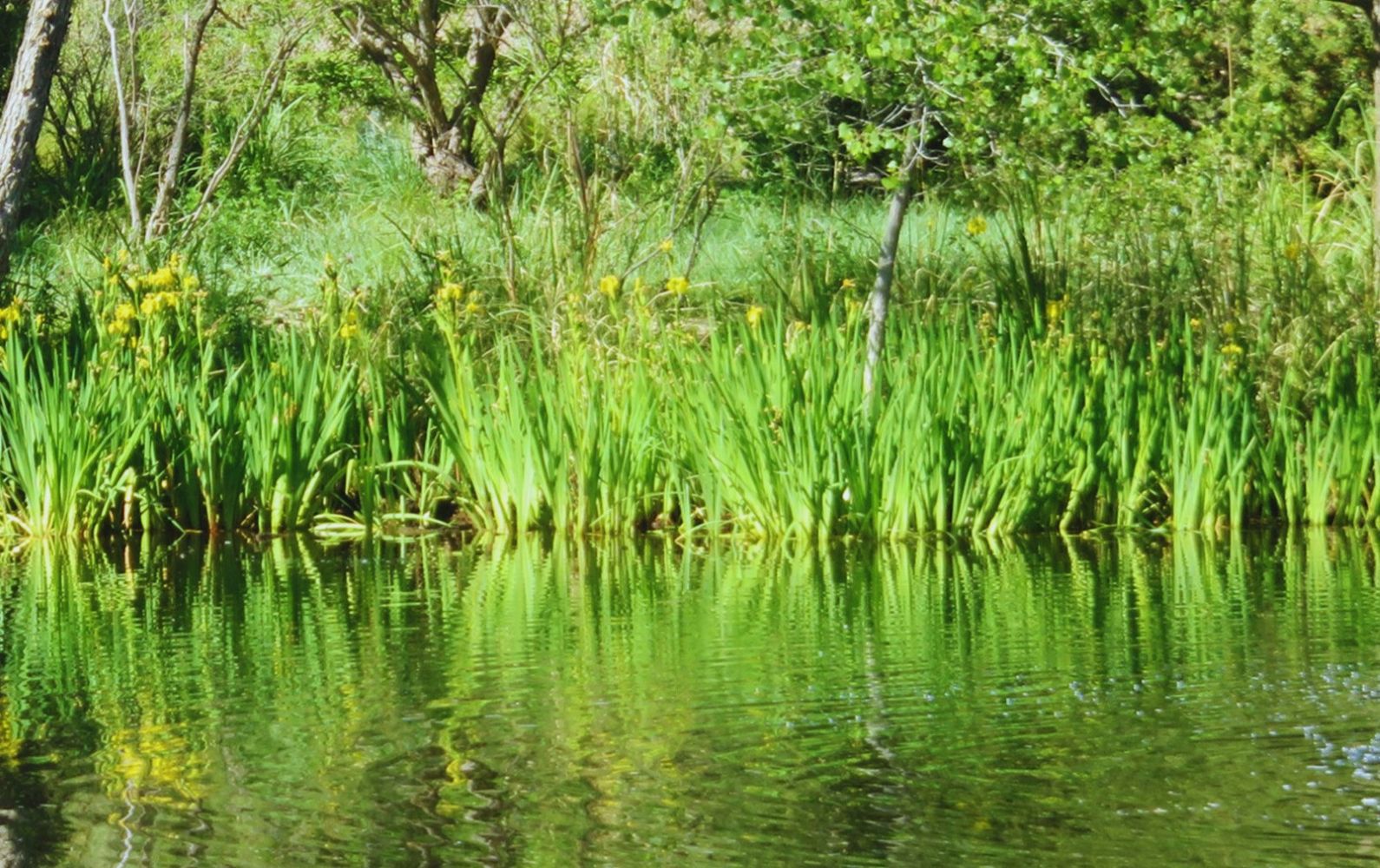
Close-up of the edge of a pond with lots of reeds and grass.

Restoration/mitigation programs should address all aspects of a site’s ecosystem, rather than simply enhancing a particular species or group of species. With this in mind, course material is designed to introduce a complete approach. Topics covered include restoration/mitigation planning; research needs; regulatory and permit coordination; early considerations of unanticipated effects, bioengineering, best management practices (BMPs), cost estimation, maintenance of the mitigation, provisions to be taken during all phase of the implementation to ensure success, and how to quantify success in terms of area and ecological function.

After completing this course, participants will be able to:
• Determine Regulatory Considerations for the planned restoration
• Understand Restoration / Mitigation Planning needs
• Determine suitable Site Conditions and Research Needs
• Understand Needs for Planting Plans
• Determine the Best Monitoring Methodologies
• Anticipate Maintenance Issues

Please wait to receive a course confirmation email, roughly one month prior to the class, before making any travel arrangements.

Intended audience

Biologists, landscape architects, planners, and environmental engineers. The course will be designed for those with limited to moderate amounts of experience in natural area management, natural resource management or in environmental permitting.

Prerequisites

A basic understanding of natural resource management.

CEUs
1.30
Course Topics
  •   Realistic Restoration/Mitigation Goals
  •   Background Research into Historic and Expected Site Conditions
  •   Regulatory and Planning Issues to Address
  •   Considerations of unanticipated effects (erosion, mosquito populations in created wetlands, drought/flooding, outside influences)
  •   Soil/Water Needs of Selected Vegetation
  •   Restoration/Mitigation Planning
  •   Responsibility of Participating Parties
  •   Pre-Restoration/Mitigation Implementation – Measures and Considerations
  •   Best Management Practices
  •   Estimations of Costs
  •   Implementation Monitoring
  •   Restoration/Mitigation Materials and Methods Selection
  •   Maintenance Methods, Anticipated and Unanticipated
  •   Development of Practical Monitoring Requirements
  •   Monitoring Techniques
  •   Performance Standards – What Can Be Realistically Expected.
  •   Protecting Your Investment: Measures for Long-Term
  •   Success of the Restoration/Mitigation Project
Course Materials
Each attendee will receive a syllabus with the course topics, descriptions, and considerations for undertaking restoration/mitigation topics.
What to bring

You will need a computer and internet connection, have your copy of the text available. 

Course Subject

Backpack Electrofishing: Principles and Practices

Electrofishing is an effective way to sample freshwater fish populations. However, it may cause injury or mortality to the fish if done incorrectly. Proper balance between efficient sampling and causing minimal harm is achieved through the knowledge of electrofishing principles and use of proper techniques.

This course combines classroom lecture with field demonstration/participation exercises to give attendees the knowledge and basic experience they will need to safely and effectively electrofish. It includes one day of classroom lecture with a field day during which the concepts discussed in class will be demonstrated and practiced by attendees. The class will visit a stream/river/creek and each attendee will operate the equipment under the guidance of the instructor.

The day of field exercises provides attendees with real-world experience applying the concepts discussed in the classroom. The combination of classroom lecture, field demonstration, and participation exercises gives attendees the knowledge and basic experience they will need to safely and effectively electrofish.

"I feel this course greatly improved my understanding of why electrofishing works" Anonymous, May 2015

“[This class provides] an excellent overview of the biological, environmental and technical considerations of e-fishing for all levels of experience. The electrofishing application in the “field” was very helpful for transfer of information and learning of topics discussed in the classroom.” B. McCrācken, June 2013


This three-day course is intended to meet the National Marine Fisheries Service (NMFS) training requirements for electrofishing field staff. The NMFS guidance and training requirements document may be downloaded here.

Reduced tuition is available to employees of Native American tribes, government agencies, and nonprofits, students, and AFS and NAEP members. 

Please wait to receive a course confirmation email, roughly one month prior to the class, before making any travel arrangements.

You may register via the registration button above or by calling the Northwest Environmental Training Center at (425) 270-3274.


Intended audience

This course is intended for biologists, field personnel, and other professionals seeking an improved understanding of the principles and techniques of electrofishing.

CEUs
2.10
Course Topics

Electric Circuits and Fields

  • Principles and terminology
  • Characteristics of AC, DC and pulsed DC waveforms
  • Power transfer
  • Electric field characteristics
  • Effects of size, shape, and spacing of electrodes
  • Water conductivity measurement
 

Fish Behavior and Welfare

  • Fish reactions in AC, DC, and pulsed DC fields
  • Attracting fish for capture
  • Causes and reductions of fish stress
  • Types and causes of fish injury
  • Reducing fish injury and mortality
  • Effects of electroshock on fish eggs and invertebrates
  • Obtaining permits for backpack electrofishing
 

Backpack Electrofishing Systems

  • System components
  • Types of equipment
  • Evaluating output
  • Troubleshooting problems
  • Understanding settings
 

Backpack Operations and Safety

  • Safe use of backpack electrofishing equipment
  • Common safety issues
  • Safety policies
  • Crew organization
  • Role of first aid and CPR training
 

Field Trip Exercises

  • Waveform output evaluation
  • Electrode resistance measurement
  • Electrical field mapping
  • Voltage threshold for fish capture
  • Fish capture techniques
  • Fish storage recovery, handling, and release
  • Field data requirements
 

Sampling Design and Applications

  • Goal-oriented designs
  • Factors affecting electrofishing efficiency
  • Use and validity of electrofishing data
  • Development of standardized power tables


Course Materials

Attendees will receive a course manual containing workshop proceedings and reference material.

What to bring

IMPORTANT (Snohomish, WA Course): Our field trip will be to Garden Creek that runs through the facility. You must bring your own gloves, waders, and wading boots but are not required to bring dip nets unless you wish. Snohomish County has issued a permit for the field trip, including the need for us to address the issue of inadvertent transport ofinvasive aquatic species on our equipment. Specifically, our gloves, waders, wading boots and dip nets must be decontaminated during the week prior to the course. If you use them within the week prior, they must be frozen for at least 12 hours and completely dried.”

Please bring a scientific calculator and a pen or pencil, and notepad if you would like to take notes (you may also choose to take notes in your book). We also recommend a laptop with Word, Excel and the ability to read PDF files. For the field, you will need chest waders or hip boots, and suitable outdoor clothing including rain gear. Depending on course location, you may also want to bring insect repellent.

We also recommend non-breathable waders


Lunch will be on your own, but drinks and snacks will be provided throughout the day.

Course Subject

Boat Electrofishing: Principles and Practices

Electrofishing is an effective way to sample freshwater fish populations. However, electrofishing may cause fish injury or mortality. Proper balance between efficient sampling and minimal harm is achieved through the knowledge of electrofishing principles and proper use of the techniques and equipment available.

This two-day course will cover the principles and practices for boat electrofishing through one classroom days and one field day during which the concepts discussed in class will be demonstrated and practiced by attendees. The class will be taken on an electrofishing equipped craft, and each person will have the opportunity to practice using the boat-based electrofishing system.

This field day exercise provides attendees with real-world experience applying the concepts discussed in the classroom. The combination of classroom lecture, field demonstration, and participation exercises gives attendees the knowledge and basic experience they will need to safely and effectively electrofish.

"Learning about the theory behind shocking made understanding the techniques much easier. The course felt cohesive, and the order in which subjects were presented made for easy comprehension." James C., May 2016

"I liked how the instructor showed us how the principles of the course could be applied practically to our sampling." Anonymous, May 2016

"Great information for operating electrofishers & background understanding of how they work and why." Mollie O., May 2016

"This seems to be a good course for both beginners and experienced e-fishermen...I appreciated the calibration of the boat to illustrate the concepts in class. Also, the feedback session on the third day helped/answered real world questions." George S., May 2016

The NMFS guidance and training requirements document may be downloaded here.

You may register online or by calling the Northwest Environmental Training Center at 425-270-3274.

Please wait to receive a course confirmation email, roughly one month prior to the class, before making any non-refundable travel arrangements.

Reduced tuition is available for Native American tribes, government employees, nonprofits, students and AFS, NAEP, NEBC, TAEP members.


Intended audience

This course is intended for biologists, field personnel, and other professionals seeking an improved understanding of the principles and techniques of electrofishing.

CEUs
1.30
Course Topics

Electric Circuits and Fields

  • - Principles and terminology
  • - Characteristics of AC, DC and pulsed DC waveforms
  • - Power transfer
  • - Electric field characteristics
  • - Effects of size, shape and spacing of electrodes
  • - Water conductivity measurement

Fish Behavior and Welfare

  • - Fish reactions in AC, DC and pulsed DC fields
  • - Attracting fish for capture
  • - Causes and reductions of fish stress
  • - Types and causes of fish injury
  • - Reducing fish injury and mortality
  • - Effects of electroshock on fish eggs and invertebrates
  • - Obtaining permits for boat electrofishing

Boat Electrofishing Systems

  • - System components
  • - Types of equipment
  • - Evaluating output
  • - Troubleshooting problems
  • - Understanding settings
  • - Safety features

Boat Operations and Safety

  • - Safe use of boat electrofishing equipment
  • - Common safety issues
  • - Safety policies
  • - Crew organization
  • - Role of first aid and CPR training

Field Trip Exercises

  • - Waveform output evaluation
  • - Electrode resistance measurement
  • - Electrical field mapping
  • - Voltage threshold for fish capture
  • - Fish capture techniques
  • - Fish holding, handling, and release
  • - Field data requirements

Sampling Design and Applications

  • - Goal-oriented designs
  • - Factors affecting electrofishing efficiency
  • - Use and validity of electrofishing data
  • - Development of standardized power tables


Course Materials

Attendees will receive a course manual containing workshop proceedings and reference material.

What to bring

Please bring a scientific calculator and a pen or pencil, and notepad if you would like to take notes (you may also choose to take notes in your book). Lunch will be on your own, but drinks and snacks will be provided throughout the day. Lunch will be provided on the field trip day. 

Course Subject

Pacific Salmonids: Spawning Habitat Restoration

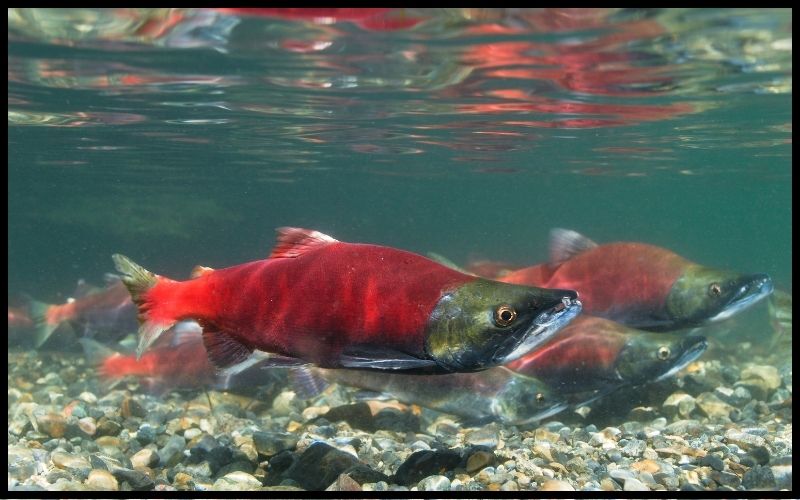
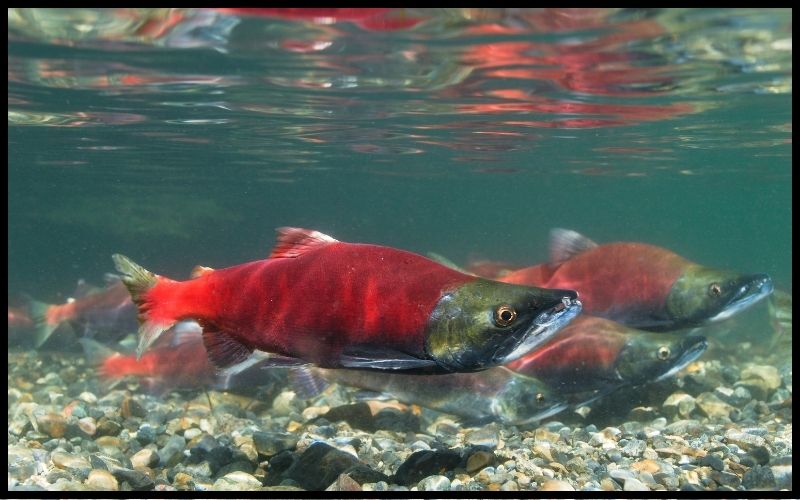
Bright red salmon in a river

How can we restore form and function to rivers, streams, and wetlands that support Pacific Salmon?  This course provides the intellectual tools to tackle assessment monitoring and restoration design of Pacific salmonid habitat.  

Some of the basic topics and questions covered include:

  • History of salmonid habitat restoration – How long have salmon issues been issues?  How have we responded?  What’s been working and what hasn’t?
  • Ecohydraulics – How does stream flow affect salmonid ecology and habitat forming processes?  What basic ecohydraulic processes do we need to account for?  What tools should we use? How can we use ecohydraulics to understand why a site is functional versus non-functional? 
  • Ecohydraulic design – the basic act of designing channel and floodplain features to meet specific target depths and velocities.  How do we take basic habitat information and design functional ecosystems?
  • Sediment transport – sediment is a vital aspect of rivers and streams and a key variable known to affect spawning.  How does sediment move in rivers?  How can we measure and model it?   What tools are available?
  • Forcing Elements – what role does wood and coarse sediment play in salmon rivers and streams?  How can we integrate Forcing elements into our design and management plans?
  • Monitoring – How do we measure project success?
  • Modern river restoration techniques – What tools do we have to restore salmonid habitat form and function?
  • Fish passage – How do we assess and correct fish passage limiting factors?


What attendees are saying about the course:

"I learned a ton ... [The instructors] are very knowledgeable and helpful when answering questions."  Meredith G., May 2019

"I really enjoyed the field component of the class. It incorporated the concepts we learned to a real-life situation." Shena H., November 2015

"Both Joe and Rocko were very engaging and knowledgeable. I really appreciated how enthusiastic and easy-to-listen-to they were." Mandy C., November 2015

"I liked the variety of material covered; how we had both the biology as well as the geomorphology." Paige A., Feb 2013


Intended audience

This course is designed for practitioners and agency personnel involved with field data collection, detailed design and/or review of river restoration projects. It provides general training in design, implementation and monitoring of in-stream habitat improvement projects in regulated streams and rivers, with an emphasis on the issues surrounding Pacific salmonid spawning.


Prerequisites

Suggested - "The Ecology of Pacific Salmonids"

CEUs
2.00
Course Topics

The course will explain and demonstrate common techniques for:

  1. Assessing habitat and collecting and analyzing field data
  2. Integrating physical, biological and aesthetic objectives into habitat improvement design
  3. Characterizing and estimating sediment transport and sediment budgets for enhancement sites
  4. Designing effective monitoring programs
  5. Choosing appropriate fish habitat improvement designs
  6. Channel and instream structure design
  7. Sediment transport
  8. Understanding enhancement limitations
  9. Selecting equipment and material
  10. Fish passage assessment and design techniques
  11. Data and project presentation
Course Materials
Attendees will receive a course manual containing workshop proceedings and reference material.
Course series
Course Subject

Pacific Salmonids: Ecology

White Red Salmon swimming upstream

Salmonids, including Pacific salmon and trout, are an important component of ecologic and economic health in western North America. Salmon and trout of the Pacific Coast have continued to evolve in the face of natural disturbances such as floods, fires, volcanoes, wind-throw and disease. In fact, these influences have helped these species maintain their resiliency. Even when natural disturbances have been severe their effects have remained localized, thereby allowing ecosystems to more easily recover. However, the magnitude of human-caused disturbances may be so great that irreversible changes will occur by increasing the impact that natural disturbances have on aquatic communities, resulting in both acute and chronic consequences for salmonids. Moreover, the changes that human activities create may be so widespread that the recovery of individual ecosystems and their components, including salmonid stocks, could be drastically altered.

While each salmonid is unique, the genetic diversity within species across drainages may be as significant as those found across different species. Despite this variety, salmonid stream management, recovery and protection initiatives rely on certain fundamental biological requirements.

This course will provide general information regarding:

  • Origins and evolution of Pacific North American Salmon;
  • Life stages of salmon and trout in both coastal and inland streams;
  • The habitat requirements applicable to each life stage;
  • Substrate quality and hydraulic flow affecting spawning behavior and redd success;
  • How habitat features, in-stream complexity, bank structure and large woody debris influence success of salmonids at different life-stages;
  • How water chemistry, water temperature and food availability affect trout and salmon behavior; and
  • How migration patterns can be impeded or enhanced by changes in flow, water quality, barriers or obstacles

"Joe [Merz] is very enthusiastic and knowledgeable.The course met and exceeded my expectations. It covered all of the basic aspects of salmonid ecology and many of the questions I've had." Leif H., May 2019

"I thoroughly enjoyed this class and feel like I have a better understanding of Salmonid ecology/biology. Thank you!" Allison F., October, 2015

"Joe [Merz]'s knowledge is immense! He is a HUGE asset to NWETC!" Sean E., October 2015

"Great delivery and presentation of a highly complex and often politically heated scientific topic. Interacted with participants, and incorporated questions throughout presentation." Jess H., May 2015

"Fantastic content. I'm a geologist and I thought the content and pacewas perfect. I have a much better understanding of why I regulate certain parameters." Anonymous, May 2015


Please wait to receive a course confirmation email, roughly one month prior to the class, before making any travel arrangements.
 

Intended audience

This course is specifically designed for practitioners and agency personnel, including biologists, ecologists, hydrologists, planners and regulators involved in stream issues addressing salmonids, water supply and quality issues.

CEUs
1.30
Course Topics
Day 1 tentative schedule:

9:00 AM - Introduction and Overview
Why are salmonids important?
What Is the Difference Between a Salmon and a Trout?
Salmonid species
Origins of the Pacific North American Salmon

10:45 AM Break

11:00 AM - Salmonid physiology
Anatomy
Processes
Life stages

12:00 PM Lunch

1:00 PM - Adults
Spawning Populations
Timing of Spawning Runs
Timing of Spawning
Redd Characteristics
Fecundity
Spawning
Egg Deposition

3:00 PM - Freshwater Residence and Downstream Migration
Incubation and Survival
Eggs and Alevins
Emergence and Fry
Juveniles
Parr
Smolts
Emigration

3:30 PM - Estuaries

4:30-5:00 PM Adjourn


 Day 2 tentative schedule:

9:00 AM Prey and Predators
Salmonids as predators- Trout and salmon food habits in fresh water
Salmonids as Prey

10:15 PM Break

10:30 PM Physical parameters
Physiology
Temperature Requirements
Dissolved Oxygen Requirements
Stress, what is it and how is it measured?
Habitat Impacts, mitigation and restoration

12:00 PM Lunch

1:00 PM The 4 H’s – hydro, habitat, hatcheries, and harvest

2:00 PM Ocean Ecology
Climate, Topography and the Marine Environment

3:30 PM Hatchery Effects
Hatchery issues associated with Pacific salmonids

4:30 PM Class Ends


Course Materials

Attendees will receive a course manual containing workshop proceedings and reference material.

Course series
Course Subject