
Remediation & Toxicology

Brownfield Site Restoration and Remediation
In this 1-day course, attendees will learn what characterizes a “Brownfield” project, how it differs from a conventional “Greenfield” real estate transaction, and why it would be desirable for a public entity or private investor to pursue a Brownfield.

Participants will learn the components of a Brownfields transaction, what legal pathways are available through individual state programs to certify site closure, and a review of state-specific Voluntary Cleanup Program (VCP) cleanup processes.  Participants will come away with better understanding of the critical due diligence tasks that are necessary to complete a successful Brownfield transaction included legal, real estate, environmental, financing, risk transfer (insurance).  Case studies and active engagement with the attendees will be used to reinforce the points presented in lecture.

Understanding the topics covered will provide attendees with a current and better-informed perspective on the actual risk and reward afforded to individual investors and public entities that are motivated to produce a win-win financial reward and public benefit


"[The instructor] explains the subject matter very well. Pertinent & understandable." C. Stolle, March 2014

"I appreciated how he encouraged class participation. It was a great way to hear other applications of the topics." Anonymous, March 2014

"I found it very informative because of interaction and questions answered in class." Anonymous, March 2014


*Reduced tuition is available for Native American tribes, government employees, nonprofits, students and AFS, NAEP, NEBC, TAEP members.

You may register online or by calling the Northwest Environmental Training Center at (425) 270-3274. Online registration is strongly encouraged.

Please wait to receive a course confirmation email, roughly one month prior to the class, before making any travel arrangements.

Intended audience

This course is intended for municipal planners, policymakers, and permitting officials who desire to have a basic working knowledge of what constitutes a Brownfield so that they are able to encourage and facilitate private and public redevelopment investment in their communities.  The course is also intended to educate real estate developers and their attorneys and environmental consultants that perceived environmental risks for Brownfields are often significantly greater than the actual risks, and that the perceived risks often stymie redevelopment unnecessarily. 

CEUs
0.70
Course Topics
  • Brownfield vs. Conventional Real Estate
  • Environmental Due Diligence
  • Regulatory Options
  • Voluntary Cleanup Program 
  • Legal Review
  • Real Estate
  • Entitlements
  • Proforma
  • Financing Options – the “Capital Stack”
  • Risk Management – Environmental Insurance
  • Environmental Investigation and Remediation
  • Case Studies
Course Materials

Attendees will receive a course manual containing workshop proceedings and reference material.

What to bring

Pen or pencil, and paper if you do not want to take notes in your manual. Drinks and snacks will be provided each day. Lunch will be on your own.
Course Subject

New Approaches in Remediation of Contaminated Sediments

**Note - This course is now offered exclusively using live stream remote attendance. You will need a computer and an internet connection. If you would like more information or have any questions, please contact us via email or phone 425 270 3274.  

Contaminated sediment poses difficult assessment and remediation challenges but recent improvements in methodologies offer much promise. New assessment methods and improved remediation technologies that directly address contaminant mobility and bioavailability have enhanced our ability to effectively manage sediments. Advantages include reduced cost and improved effectiveness over conventional methods.

 In this two-day class, we will address both conventional and emerging technologies for remediating contaminated sediments including removal followed by treatment and disposal; in situ isolation of the sediments from the environment by covering the sediment with neutral materials (i.e., passive capping); active capping technologies, and monitored natural recovery, which involves monitoring processes that isolate, degrade, transform, and immobilize sediment contaminants under natural conditions. The course will address solutions to contaminants in both marine and freshwater sediments including the effects of remediation on the benthic environment. Emerging technologies that address contaminant toxicity, biogeochemistry and transport mechanisms will also be highlighted.

 The class will incorporate new approaches for including bioavailability in risk assessments and the evaluation of remedial effectiveness. Bioavailability controls the transfer of contaminants from sediments to ecological receptors and humans and can rarely be predicted from total contaminant concentrations alone. Successful evaluation of bioavailability involves the selection of analytical methods that are suitable for the organisms and sediment environments under consideration and often involves a weight-of-evidence that incorporates multiple lines of evidence.

 Although problems remain, contaminated sediment management/remediation is improving due to the control and elimination of contaminant sources, development of new remedial technologies, and selection of analytical methods to evaluate metal bioavailability.

After completing this class, participants will be able to:

  • Distinguish sources and types of contaminants at the sites
  • Determine fate and transport of contaminants
  • Understand current remediation strategies and new approaches
  • Identify remediation effectiveness: defining, monitoring, and demonstrating success
  • Apply chemical/toxicological/biological measurements to characterize the site before/after the remediation
  • Understand the selection of remedial technology
  • Determine bioavailability of contaminants before and after remediation actions
  • Understand the method of remedial technology deployment
  • Apply novel, improved tools and techniques for site-specific assessment of contaminant before/after remedial


"It was an excellent overview of the subject area. Dr. Knox has a clear command of the subject materian, and was up to date on current science and engineering projects."  Douglas C. Nov 2015

"Thank you for providing this training. It will be helpful in the future when updating our state's guidance documents. Also, Dr. Knox is now one of my heroes!" J. Mauricio, February 2014

"This is a great way to stay informed on sediment remediation as well as learn new ideas and approaches for sediment remediation." R. Baeten, July 2013

"Dr. Knox was fantastic and a clear expert in the field, yet was able to distill her knowledge into a forum easy to follow and understand.…[She also presented] a lof of great real-world data and applications." J. McCorkle, July 2013

 CEC's: 13 Technical CEC's


*Reduced tuition is available for Native American tribes, government employees, nonprofits, students and AFS, NAEP, NEBC, TAEP members.

You may register online or by calling the Northwest Environmental Training Center at (425) 270-3274. Online registration is strongly encouraged.

Please wait to receive a course confirmation email, roughly one month prior to the class, before making any travel arrangements.

Intended audience

This class is designed for students seeking a greater understanding of the effects of contaminated sediments on the benthic environment and remediation technologies for contaminated sediments.

Past attendees have included environmental professionals, consultants, researchers, students, industrial site owners and operators, and government agencies such as DOD and DOE. 

Prerequisites

Some college-level chemistry or environmental chemistry. A basic knowledge of environmental contamination would be helpful.

CEUs
1.30
Course Topics

After completing this class, participants will be able to:

  • Distinguish sources and types of contaminants at the sites
  • Determine fate and transport of contaminants
  • Understand current remediation strategies and new approaches
  • Identify remediation effectiveness: defining, monitoring, and demonstrating success
  • Apply chemical/toxicological/biological measurements to characterize the site before/after the remediation
  • Understand the selection of remedial technology
  • Determine bioavailability of contaminants before and after remediation actions
  • Understand the method of remedial technology deployment
  • Apply novel, improved tools and techniques for site-specific assessment of contaminant before/after remedial


Course Materials

Attendees will receive a course manual containing workshop proceedings and reference material.

What to bring

Pen or pencil to take notes and paper if you do not want to write in your manual.  Lunch will be on your own. In person courses will have drinks and snacks provided as current health recommendations allow. 

Course Subject

Planning and Preparing an Ecological Risk Assessment

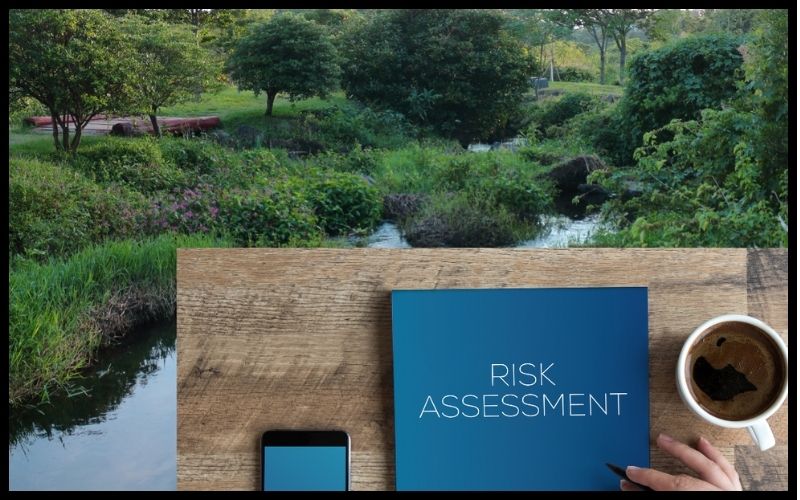
The folder that says "risk assessment" next to a phone and a cup of coffee overlaid on a photo of a wetland

In this 3-day course, attendees will learn and review both the technical and regulatory approaches to completing ecological risk assessments. Participants will come away with an understanding of the planning and preparation process for the completion of an ERA, including data development needs, selection of endpoints, and the development of lines of evidence. Understanding the topics covered will give attendees the ability to accurately assess the potential for ecological risk, which is paramount to the remedial decision-making process. In today’s environmental project planning, this can make the difference between the success or failure of a recommended action or approach.

During the course, attendees will examine the development of ERAs in both aquatic and terrestrial settings, and will receive a broad overview of the ecological risk assessment (ERA) process as it is used in evaluating potential environmental risks and liabilities associated with hazardous waste sites. Emphasis will be placed on providing a hands-on understanding of ecological risk assessment using the basic ERA paradigm as outlined in USEPA’s Ecological Risk Assessment Guidance for Superfund (ERAGS). Case studies and active engagement with the attendees will be used to reinforce the points presented in lecture.

"Would be great for project managers to understand the work being done on the site, especially minesites."  Jennifer H. Nov 2015

"Very knowledgable instructor…[liked] case studies and field trip." N. Bland, July 31-Aug.1, 2013

"The information was presented/taught very well.  I have a better understanding of ERA's.  I am very impressed with the course." C. Marchand, September 2013

"The instructor was great! He was very knowledgable of the subject and explained it well.  Very Helpful – even for someone involved in a ERA for the last four years." C. Marchand, September 2013

Please wait to receive a course confirmation email, roughly one month prior to the class, before making any travel arrangements.

Intended audience

This course is intended for environmental professionals including, but not limited to government and contractor personnel involved in site cleanup, environmental consultants, environmental lawyers, engineers, remedial managers, and environmental students.

CEUs
1.30
Course Topics
  • Regulatory requirements
  • General overview of ecological risk assessment
  • Review of the 8-step ERAGS process
  • Regional and/or state approaches and perspectives
  • Problem formulation
  • Conceptual site models
  • Characterization of exposure
  • Characterization of ecological effects
  • Risk characterization
  • Uncertainty analysis
  • Special circumstances
  • Conclusion


Course Materials
Attendees will receive a course manual containing workshop proceedings and reference material.
Course Subject

Principles and Practical Skills for Environmental Site Assessment (ESA)

This training course presents principles and practical skills for conducting subsurface Environmental Assessments, with a focus on soil and groundwater contamination (and separate phase contaminants, if suspected or present). This course will review the process of Environmental Assessments conducted to determine whether suspected contamination is present. If a contaminant is present in sufficient quantity to be reportable and/or warrant further investigation (often referred to as a Phase II Environmental Site Assessment) and conducting assessment and delineation of a known release for submittal to an environmental regulatory agency. The class will provide a full spectrum of skills and knowledge to understand and execute a successful assessment.

Intended Audience: This course is intended for engineers, geologists, scientists and others conducting or needing to conduct or interpret Environmental Assessments. Environmental regulatory agency staff (federal, state and local), decision makers, consultants, environmental organization staff, attorneys, and interested citizens affected by or interested in Environmental Assessments will also benefit from the course.

Course Materials:
Each participant will receive a copy of the course proceedings including notes and reference materials on the first day of the course.

Continuing Education Units
: 1.3 CEU's

Registration: $395
You may register via the link below or by calling the Northwest Environmental Training Center at (425) 270-3274

Please wait to receive a course confirmation email, roughly one month prior to the class, before making any travel arrangements.
 

Course Topics
What is an Environmental Assessment?
  • Types of Environmental Assessment
  • Soil and Groundwater Contaminant Assessment
  • Why are Environmental Assessments Conducted?
Planning the Environmental Assessment
  • Assessment to Determine Whether Contaminants Exist
  • Assessment to Delineate Known Contaminants
  • Where to Begin?
  • Before You Go to the Site; When You Get There
Drilling and Sampling Soils
Monitoring Wells and Groundwater Sampling
  • Types of Monitoring Wells
  • Installation of Monitoring Wells
  • Groundwater Sampling
Assembling Additional Data Onsite
  • Groundwater Flow Direction, Gradient, Magnitude Data
  • Assembling a Body of Site Information
  • Slug Tests and Pumping Tests
Understanding the Phase II Environmental Site Assessment
  • Purpose and Approach to a Phase II ESA
  • Understanding Applicable Standards
  • Confidentiality and Preparing the Phase II ESA
Understanding Delineation of Environmental Contamination
  • Understanding Contaminant Behavior in Soil, GW, Sep Phase
  • Horizontal and Vertical Delineation in Soil, GW, Sep Phase
Determinations of Groundwater Flow and Transport
  • Elevation Survey and Triangulation
  • Calculating Groundwater Flow Direction and Gradient Magnitude
  • Calculating Hydraulic Conductivity
  • Groundwater Velocity and Contaminant Transport Velocity
The Assessment for an Environmental Regulatory Agency
  • Agency Guidelines, Formats, Contents, Organization
  • To What Standards Should We Delineate?
  • Findings, Conclusions and Recommendations
Recent and Current Developments
Course Materials
Attendees will receive a binder containing workshop proceedings and reference material.
What to bring

Pencil or pen, coffee mug and water bottle (to reduce waste). Please wear comfortable clothing appropriate for the prevailing weather. Coffee, tea and light snacks will be provided. You will be on your own for lunch.

Course Subject

Introduction to Aquatic Toxicology

This introductory course provides participants with a strong foundation of aquatic toxicology and how these concepts are applied to managing pollutants in aquatic environments. The course covers terminology, common test designs, and endpoints such as lethality and endocrine disruption. Important legacy and emerging pollutants of concern such as heavy metals, organic pesticides, PAHs, PCBs, PBDEs, pharmaceuticals, personal care products, and nanoparticles will also be presented. Fate and transport as it relates to bioavailability and pollutant partitioning in aquatic environments will be discussed. Water Quality criteria from the Clean Water Act with an emphasis on, and examples of, site specific criteria for metals using hardness correction, water effects ratio (WER), and the biotic ligand model (BLM) are also included.

After completing this course, participants will be able to:

  • Apply toxicology principles to environmental issues.
  • Understand how aquatic organisms are exposed to toxic chemicals.
  • Identify factors affecting toxicity.
  • Understand similarities and differences between the toxicity of metals and organic chemicals.
  • Understand modes of action of toxic chemicals, types of effects from the molecular to the ecosystem level, and detoxification processes.
  • Assess toxicity in terms of LC50 and EC50, and develop dose-response curves.
  • Identify the advantages and disadvantages of various toxicity testing methods.
  • Understand the scientific basis for and limitations of water quality standards.


"Allowed me to put together a lot of pieces of information and build on existing knowledge. Logical progression of material and good examples." Anonymous, Dec 2015

"The scientific knowledge and teaching methods of the instructor were fantastic. It was very interesting and collaborative which made it fun and interesting." Z. Froyland, March 2014

"Ruth explains things very well and is incredibly knowledgeable on the subject. She kept everyone interested and engaged." A. Kron, March 2014

"The course is an appropriate blend of new methods and technology with longstanding concepts and standards.  The approach of instruction engages attendees to use analytical tools introduced in problem solving then evaluates the value of the conclusion." B. Wanstall, April 2013

*Reduced tuition is available for Native American tribes, government employees, nonprofits, students and AFS, NAEP, NEBC, TAEP members.

You may register online or by calling the Northwest Environmental Training Center at (425) 270-3274. Online registration is strongly encouraged.

Please wait to receive a course confirmation email, roughly one month prior to the class, before making any travel arrangements.

Intended audience

This course is designed for professionals seeking a greater understanding of aquatic toxicology and for practitioners and agency personnel, including toxicologists, biologists, ecologists, hydrologists, planners and regulators involved with stream issues.

Prerequisites

Some college-level biology and chemistry coursework is required (even if it was a long time ago). A fundamental understanding of aquatic ecology is also helpful.

CEUs
1.30
Course Topics
  • Classes of toxic chemicals (carcinogens, mutagens, teratogens, and others).
  • Sources of toxic chemicals entering the aquatic environment.
  • Exposure pathways for aquatic organisms.
  • Biological, physical, and chemical factors affecting bioavailability and toxicity.
  • Bioaccumulation, bioconcentration, and biomagnification.
  • Modes of toxic chemical action, including enzyme inhibition and endocrine disruption.
  • Types of toxic effects: biochemical, molecular, physiological, behavioral, population, and community.
  • Toxicity testing methods: acute and chronic, single and multiple species.
  • Laboratory assessment of toxicity: LC50, EC50, NOEC, LOEC, MATC, and dose-response curves.
  • Development and use of water quality standards.
  • Field application of toxicology using the biomarkers.
Course Materials

*Registered attendees will receive a PDF copy of course materials prior to the class. A physical book can be purchased for an additional $50 charge. To purchase, select "Physical Book" above. If choosing the "E-Book" option, note that you must bring a device to view the PDF to class.

What to bring

Drinks and snacks will be provided each day. Lunch will be on your own. If you have choosen the "E-Book" option, note that you must bring a device to view the PDF to class.

Course Subject